


Are Forest Guards to the Rescue?
By Alabidun Shuaib AbdulRahman
Nigeria’s insecurity story has become the longest‑running drama of our national life, and, at times, its most tragic one. Every week seems to bring another report of village raids, kidnappings, forest‑based ambushes or displaced families seeking refuge from bandits and terrorists. City centres barely register the scale of fear that grips the rural hinterland, where the reach of the state has, for years, thinned to near invisibility. In this context, one of the most talked‑about security interventions of 2025 has been the launch of Forest Guards, a new security force aimed at reclaiming Nigeria’s forest reserves from criminal exploitation. But the fundamental question remains: Is this initiative truly to the rescue?
On May 15, 2025, President Bola Ahmed Tinubu approved the establishment of a national Forest Guards system as part of broad efforts to curb escalating insecurity across Nigeria. The announcement, made at an expanded Federal Executive Council meeting, envisaged recruiting as many as 130,000 forest guards nationwide by directing each state and the Federal Capital Territory to hire between 2,000 and 5,000 operatives depending on their financial capacity. The recruitment and training process was to be jointly supervised by the Office of the National Security Adviser (ONSA) and the Ministry of Environment, with other arms of government providing strategic partnerships.
READ ALSO: FRSC Rescues Anthony Joshua as Two Die in Ogun Road Crash
Nigeria has 1,129 recognised forest reserves and protected areas spread across 36 states and the FCT, making it one of the countries with extensive forest cover on the continent. Many of these forests have become havens for bandits, terrorist groups and kidnappers who exploit the terrain’s complexity to evade the reach of conventional security forces. The initiative’s core premise is to deny these criminals the luxury of sanctuary and operational space by placing trained personnel directly within the forests and surrounding communities.
The launch was greeted with a blend of cautious optimism and scepticism. On one hand, the idea of forest‑specific security adherents — indigenous recruits familiar with local terrain — promised something more nuanced than the traditional military incursions that have repeatedly failed to sustain security gains. On the other hand, concerns about resourcing, coordination, recruitment delays and the overall viability of such a large force in a tilted fiscal climate began to surface almost immediately after the announcement.
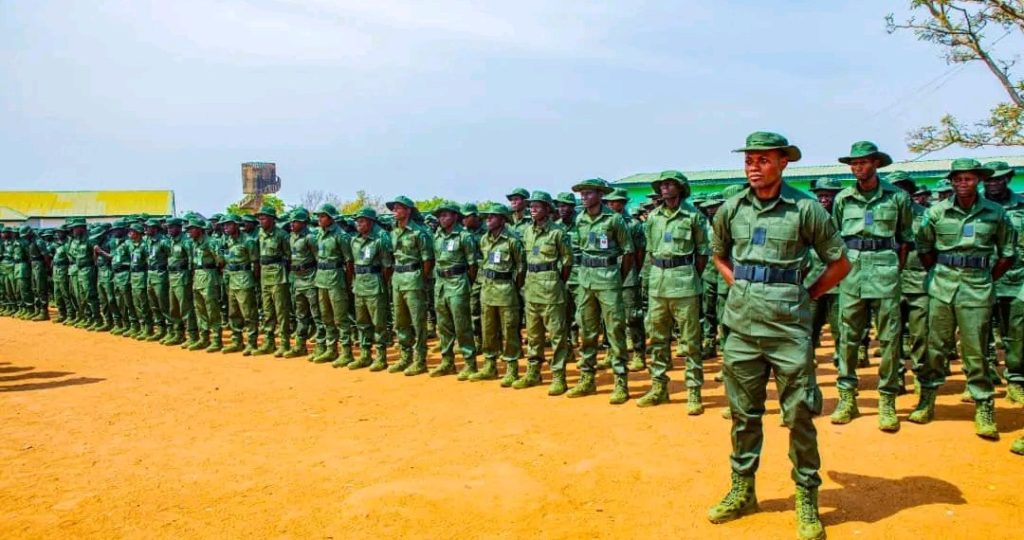
Seven months after the launch, the first cohort of Forest Guards has begun to take shape. On December 27, 2025, over 7,000 newly trained Forest Guards graduated from an intensive three‑month training programme under the Presidential Forest Guards Initiative. The graduates emerged from exercises held simultaneously across seven frontline states — Borno, Sokoto, Yobe, Adamawa, Niger, Kwara and Kebbi — marking what many officials described as the operational takeoff of the project. These states were selected partly because they include forest corridors most closely linked to violent criminal activity.
At the graduation ceremonies, National Security Adviser Mallam Nuhu Ribadu outlined the initiative’s purpose: to “strengthen Nigeria’s internal security architecture by denying terrorists, bandits, kidnappers and other criminal groups sanctuary within forested and hard‑to‑reach terrains,” and to serve as “first responders, gather intelligence and support security agencies operating in forests and difficult terrain.” According to Ribadu, deployment would begin immediately, with salaries and allowances to commence without delay.
The guards were trained not simply in physical endurance and patrol discipline, but in human rights, international humanitarian law, ethics and civilian protection. This curriculum including arms handling and regulated use‑of‑force procedures was deliberately structured to ensure that the guards would operate professionally and within established legal frameworks.
Yet seven months after the presidential approval, not all states have fully embraced the initiative. As at last count, the recruitment efforts vary widely: while states like Borno, Adamawa, Kwara, Plateau, Niger, Edo, Anambra and Enugu have begun processes, others such as Kaduna, Ondo, Benue, Kano, Jigawa, Akwa Ibom and Gombe lag behind in recruitment and mobilisation. It was argued that without universal adoption and consistent funding, the force risks patchy coverage that does little to alter the country’s broader insecurity picture.
Still, the fact that thousands of guards are now equipped, trained and being dispatched to forest zones represents a symbolic break from past half‑measures. It reflects a growing consensus among policymakers and security strategists that conventional military responses, often reactive and episodic, must be complemented by specialised, sustained presence in the spaces where criminal networks thrive.
Nigeria’s approach echoes similar strategies elsewhere in the world, albeit adapted to local contexts. In southern Africa, anti‑poaching ranger units have shown that continuous, well‑trained presence in protected areas can significantly reduce illegal activity; documented declines in poaching and encroachment followed sustained ranger deployments in conservation zones. While Nigeria’s Forest Guards are focused on insecurity rather than wildlife protection, the operational logic is similar: constant presence alters the behavioural calculus of those who operate outside the law.
In India’s forested insurgency zones, forest guards working alongside conventional security forces have helped limit mobility and operational space for insurgent groups. The collaborative model, combining local knowledge, community engagement, and formal security mandates has been credited with improving early warning and preventive capacity in areas where terrain favours non‑state actors.
China, despite its very different political environment, has deployed millions of forest rangers nationwide to enforce laws and protect resources, underlying the broader principle that unmonitored terrain invites exploitation.
These international parallels suggest that a specialised force rooted in terrain familiarity and community engagement can yield positive results. But it also posits the prerequisites for such success: adequate resourcing, clear legal authority, accountability, consistent funding, and structures that prevent politicisation or fragmentation. Nigeria’s Forest Guards may be a promising model, but without these underpinning elements, they risk becoming another iteration of well‑meaning policy that struggles under real‑world pressures.
For rural communities long left to fend for themselves, the presence of Forest Guards is welcome. Anyone who has seen a village terrorised for weeks can attest to the psychological value of a sustained security presence. But analysts caution that security alone cannot provide a durable solution. Poverty, unemployment, weak local governance and distrust of the state remain powerful drivers of criminal recruitment and persistence. Unless Forest Guards are integrated into broader development strategies including livelihood support and meaningful local governance their impact may be limited to temporary disruptions rather than lasting peace.
Another dimension of the Forest Guards debate revolves around accountability and professionalism. Nigeria’s history with auxiliary forces and special initiatives has been mixed, with some units overstepping mandates or becoming politicised over time. For Forest Guards to be credible, they must operate transparently, with accountability mechanisms that reassure citizens and protect human rights. This is especially important in forest communities where distrust of security agents sometimes runs deep.
Effectiveness must also be measured, not assumed. Public discourse often gravitates toward dramatic figures and proclamations, but the real test will be quantifiable outcomes: reductions in forest‑based kidnappings, dismantling of criminal encampments, improved safety on rural routes, and greater confidence among farmers and traders in returning to their lands. Nigeria’s security sector has sometimes been weak on data‑driven evaluations, but if Forest Guards are to transcend rhetoric, clear metrics and regular reporting will be indispensable.
Sustainability remains the overbearing question. Maintaining a specialised force of potentially 130,000 personnel that is well trained, paid, monitored, and accountable requires serious budgetary commitment. Nigeria’s economy is under strain, and security spending already commands a significant share of public finances. Ensuring that Forest Guards do not become victims of fiscal neglect will require sustained political will that goes beyond headline launches.
Yet, even with these caveats, the emotion in many affected communities is unmistakable: cautious hope. For farmers whose fields have been overrun, for traders who abandoned routes for fear of kidnappers, and for families rebuilding after raids, the idea that state presence could transform once‑feared forests into safer spaces matters deeply. It may not be the single panacea for all forms of insecurity, but it is an acknowledgment that Nigeria’s security challenges demand innovative and context‑specific solutions.
Ultimately, whether Forest Guards are truly “to the rescue” will depend on actions taken in the months and years ahead, not only on the ground but in corridors of policy, budgeting and public accountability. The forests have waited long enough for effective governance; now, the state’s ability to sustain this initiative may be one of the defining tests of its commitment to protecting every Nigerian, not just those in urban centres.
Nigeria’s insecurity did not emerge overnight, and it will not vanish overnight. Forest Guards represent an important step toward recognising that the battle for peace includes the spaces that have long been ignored. If properly resourced, professionally guided, and integrated with broader security and socio‑economic frameworks, they may yet prove to be not just a policy experiment, but a genuine rescue for communities long overshadowed by fear.


