


COLUMN: Before Wike Turns Abuja City to Jakarta
By Alabidun Shuaib AbdulRahman
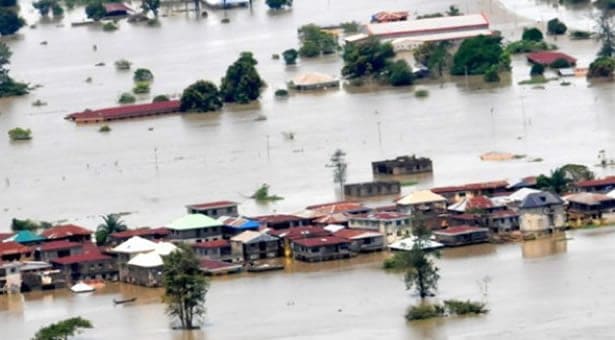
There is something deeply unsettling about watching Abuja, a city conceived as one of Africa’s most ambitious experiments in planned urban development, repeatedly surrender parts of itself to floodwater.
The latest flooding in parts of the Federal Capital Territory is not merely another rainy-season inconvenience. It is a warning. And the warning is bigger than the immediate political argument over whether Minister of the Federal Capital Territory, Nyesom Wike, should be blamed for what happened.
The more important question is whether Abuja is gradually developing the same urban pathologies that have made Jakarta a global symbol of uncontrolled urban expansion, disappearing waterways, inadequate drainage, environmental degradation and the expensive consequences of allowing development to outrun planning.
That comparison should not be misunderstood. Abuja is not Jakarta. Abuja is inland, while Jakarta is a coastal megacity battling sea-level rise and severe land subsidence. Parts of North Jakarta, for instance, have recorded subsidence of between 15 and 25 centimetres annually, dramatically worsening its exposure to flooding. But cities do not have to share the same geography to share the same mistakes. That is where Wike must be careful.
READ ALSO: 2027: PDP Picks Igbaja-Born Moshood Bakare for Ifelodun Federal Constituency
The former Rivers State governor has unquestionably changed the physical appearance of Abuja since President Bola Tinubu appointed him FCT minister in August 2023. Roads have been reconstructed, bridges completed, neglected infrastructure revived and several long-abandoned projects pushed towards completion.
By July this year, Wike said the FCT had inaugurated its 50th project since the Tinubu administration came into office. The projects include roads, water infrastructure and other public works across the territory. To be fair to him, that record deserves commendation. However, roads alone do not make a city.
A city is a living system. Its roads, drainage channels, wetlands, parks, residential districts or areas, commercial centres, waterways and population must function together. When one element is aggressively developed while another is ignored, the consequences eventually become visible.
The flooding witnessed in Abuja this August should therefore force a more uncomfortable conversation about the direction of the capital. On August 18, Wike visited flood-affected areas in Maitama and reportedly discovered a structure sitting on a drainage area whose allocation had been revoked in 2011 in the public interest. That discovery is important for a reason that goes beyond the particular building because if a plot officially designated as a drainage area could be allocated, revoked and subsequently developed despite the restriction, then Abuja’s problem is not simply rainfall. It is governance.
And governance is precisely where the Jakarta analogy becomes relevant. Jakarta’s flooding crisis was not created overnight. Years of rapid urbanisation, excessive groundwater extraction, loss of natural absorption areas, pressure on drainage systems and development along waterways combined to produce a crisis that became progressively more difficult and expensive to reverse. The World Resources Institute has noted that Jakarta’s land subsidence averages about 12 centimetres annually, with parts of the northern coast experiencing rates as high as 25 centimetres.
As it stands, Abuja does not face Jakarta’s sinking-land problem. But Abuja faces a related urban danger: the gradual destruction of the spaces through which water is supposed to move. A drainage channel is not an empty piece of land waiting for a developer. A wetland is not idle property. A green area is not necessarily undeveloped land begging for a building. They are components of the city’s natural infrastructure. And once politicians, civil servants, developers and influential residents begin treating them as disposable, the city starts paying the price.
This is why Wike’s decision to order the demolition of structures obstructing designated waterways is both necessary and politically dangerous. To some extent, that is the right principle. But principles become meaningful only when they are applied consistently. If Wike demolishes the house of an ordinary resident while a politically connected developer is allowed to retain an equally illegal structure, then the exercise will become another chapter in Nigeria’s familiar story of selective enforcement.
The minister should therefore resist the temptation to turn the demolition campaign into a spectacle. What Abuja needs is not demolition theatre. It needs urban discipline. There must be a comprehensive audit of drainage corridors, floodplains, wetlands and waterways across the Federal Capital City and the satellite towns. Every questionable allocation should be investigated. Every revoked plot should be reconciled with the physical structures standing on it. And where demolition becomes unavoidable, compensation and relocation questions must be handled according to law and due process.
The Abuja Master Plan was conceived precisely to prevent the kind of urban disorder now threatening the capital. The original plan was formulated in 1979, while the detailed plan for the central district was developed in the early 1980s under the direction of Japanese architect Kenzo Tange. That is one of the ironies of modern Abuja. A city designed with extraordinary attention to order is increasingly being tested by disorder.
The original planners could not have predicted Abuja’s current population pressures, real estate boom, traffic density, climate pressures and sprawling satellite settlements. The city has changed dramatically since the 1970s. Yet the answer cannot be to abandon planning. The answer is to update it. Indeed, an urban planning review has noted that Abuja’s 1979 master plan has remained largely unchanged despite more than four decades of rapid urbanisation. This is where Wike’s legacy will ultimately be judged. Will he merely construct more roads within an old urban framework, or will he help create a modern Abuja capable of surviving the pressures of the next 50 years?
Abuja needs an integrated storm-water management strategy, not sporadic intervention after every major rainfall. Drainage channels must be mapped, cleared and maintained before the rains. Construction permits must be linked to proper hydrological assessments. Developers should be required to demonstrate how their projects will manage storm-water runoff. The administration must also look beyond Maitama, Wuse, Garki and the other affluent districts.
The real test of Abuja’s planning system lies in its rapidly expanding outskirts. Kuje, Gwagwalada, Bwari, Kubwa, Lugbe, Karu and other growth corridors are experiencing enormous development pressures. Wike has invested heavily in connecting these communities with roads and other infrastructure. That is commendable. But every new road creates development pressure. Every new interchange increases land value. Every improved corridor attracts houses, shopping centres, estates, filling stations and commercial activity. Infrastructure therefore creates both opportunity and responsibility.
If roads arrive without drainage, planning enforcement, waste management and environmental protection, today’s infrastructure investment can become tomorrow’s flooding problem. This is how cities drift into crisis. Not because one administration deliberately sets out to destroy them, but because thousands of individual decisions accumulate until the city itself begins to malfunction.
Jakarta offers that warning. Its experience demonstrates that once urban environmental damage reaches a certain point, governments spend enormous sums trying to repair problems that could have been prevented much more cheaply through planning and enforcement. Jakarta has consequently had to undertake massive flood-control interventions while simultaneously confronting the consequences of decades of groundwater extraction and uncontrolled urban expansion.
Abuja still has the advantage Jakarta wishes it had, which is time. Wike should therefore see the August flooding as more than an opportunity to order demolitions. It should be the beginning of a comprehensive Abuja Resilience Strategy. That strategy should combine the enforcement of the master plan with a modern review of the master plan itself. It should protect wetlands, restore drainage corridors, expand green infrastructure, improve waste management and establish a transparent digital register of land allocations and planning approvals.
Most importantly, it must end the culture in which political influence can bend urban planning rules. The Maitama discovery is a warning in this regard. A drainage area revoked more than a decade ago should not later become a building site.
Abuja does not need another powerful minister who can demolish structures. It needs institutions powerful enough to prevent illegal structures from being approved in the first place.
Wike has shown that he understands the politics of physical development. He has demonstrated urgency in pushing contractors and completing projects. His administration has been particularly aggressive about roads and other visible infrastructure, with dozens of projects commissioned. Now he must demonstrate that he understands the politics of urban sustainability.
Wike still has an opportunity to change the trajectory of anyhowness building of structures in the city. He can leave Abuja with hundreds of kilometres of roads and dozens of commissioned projects. Or he can leave something more enduring: a capital whose development respects the ecological systems that make urban life possible.
Alabidun is a media practitioner and can be reached via alabidungoldenson@gmail.com


