


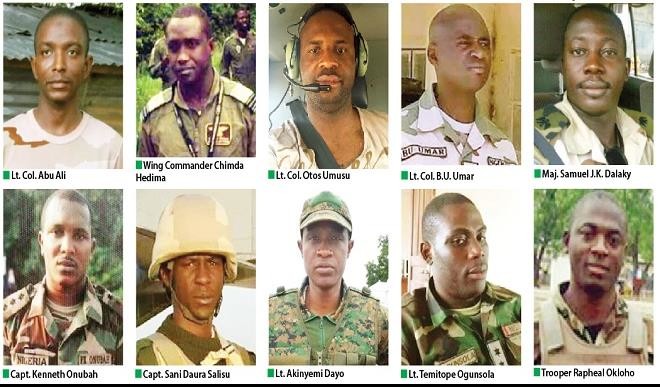
In Honour of Our Fallen Heroes
By Alabidun Shuaib AbdulRahman
Every nation is sustained by the quiet courage of those who stand between order and chaos. In Nigeria, that burden has rested heavily on the shoulders of the Armed Forces and other security personnel for decades, but especially in the past fifteen years of relentless insecurity. From the creeks of the Niger Delta to the forests of North West and North East to the highways of the North Central, Nigerian soldiers, airmen, sailors and policemen have borne the brunt of a war that is often unseen by those who sleep peacefully at night. To speak in honour of our fallen heroes is not merely to rehearse grief; it is to confront, honestly and courageously, the meaning of sacrifice, the demands of honour and the moral obligation of welfare owed to those who gave everything and to the families they left behind.
Nigeria’s contemporary security challenges did not begin yesterday. The Boko Haram insurgency, which escalated violently after 2009, has remained one of the deadliest conflicts on the African continent. According to data from the Armed Conflict Location and Event Data Project (ACLED), tens of thousands of lives have been lost to the insurgency, with security personnel accounting for a significant proportion of the casualties. Names like Giwa Barracks, Baga, Monguno and Marte are etched into the collective memory of the military not just as locations, but as reminders of intense battles where many soldiers paid the supreme price. One such name that still resonates is Lieutenant Colonel Muhammad Abu Ali, a gallant armoured corps officer who was killed in action on 4 November 2016 near Malam Fatori in Borno State while leading troops against Boko Haram fighters. His death symbolised the kind of front-line leadership that defines true military honour: commanding from the front, sharing risks with subordinates, and refusing the safety of distance.
READ ALSO: Celebrating ASUU-FG’s Historic Reset with Caveats, by Farooq A. Kperogi
Beyond the North East, the expanding frontiers of insecurity have claimed more lives. On 29 June 2022, Nigeria was shaken by the deadly ambush in Shiroro Local Government Area of Niger State, where at least 34 soldiers were killed by bandits while on a stabilisation mission. The scale of that single loss was a sobering reminder that the battlefield had shifted, and that sacrifice was no longer confined to one theatre of operation. Similar tragedies have followed. In March 2024, 17 soldiers lost their lives in Okuama community, Delta State, during a peace mission gone wrong, prompting national outrage and renewed debates about rules of engagement, intelligence failures and community-military relations. Each of these incidents added fresh names to a growing roll of honour, while also raising uncomfortable questions about preparedness, equipment and support for those sent into harm’s way.
Yet, sacrifice is not only measured in deaths. Thousands of Nigerian service personnel have returned from operations with life-altering injuries, trauma and scars that are invisible but enduring. The Defence Headquarters has repeatedly acknowledged the psychological toll of prolonged deployments, particularly in counter-insurgency operations where lines between combatants and civilians are blurred. The fallen heroes, therefore, represent not only those who died, but also those whose lives were irreversibly changed in service to the nation. To honour them meaningfully is to recognise that sacrifice is cumulative, personal and often lifelong.
Honour, however, must not be reduced to rhetoric. Every 15th of January, Nigeria observes Armed Forces Remembrance Day (now Armed Forces Celebration and Remembrance Day), a tradition rooted in the commemoration of soldiers who died in the First and Second World Wars and later expanded to include those lost in peacekeeping missions and internal security operations.
On 15 January 2026, President Bola Ahmed Tinubu through Vice President Kashim Shettima laid a wreath at the National Arcade in Abuja and reaffirmed the nation’s gratitude to its fallen heroes, describing them as “the pillars upon which our peace rests.” Similar ceremonies took place across states, from Lagos to Enugu, Kaduna to Kwara, accompanied by solemn words and military parades. These rituals matter. They reaffirm national memory and signal state recognition. But honour loses meaning if it ends at symbolism.
True honour is institutional and continuous. It is reflected in how promptly families of the fallen are informed, how respectfully remains are handled, how transparently benefits are processed and how consistently promises are kept. Over the years, allegations of delayed entitlements and neglected widows have surfaced, sometimes fuelling public anger and mistrust. The Nigerian Army and the Ministry of Defence have responded by clarifying welfare frameworks and insisting that official policies are robust. According to the Ministry of Finance and the Ministry of Defence, families of deceased service members are entitled to death benefits, gratuity, pensions, burial expenses and payments under the Group Life Insurance Scheme, a statutory policy that mandates life insurance coverage for all public servants, including military personnel.
In October 2023, President Tinubu approved an assurance policy valued at about ₦18 billion to cover life insurance benefits for fallen heroes, reinforcing the administration’s stated commitment to military welfare. In March 2024, the federal government also bestowed posthumous national honours on the 17 soldiers killed in Delta State, alongside promises of housing support and educational scholarships for their children. Several state governments have complemented federal efforts. Lagos State has sustained its scholarship scheme for children of fallen officers, while Ogun, Edo and other states have publicly pledged financial and social support to bereaved families during recent remembrance events.
These measures are commendable, and fairness demands that government be acknowledged where it has taken concrete steps. Welfare frameworks today are more clearly articulated than they were a decade ago, and there is greater public scrutiny of how military benefits are administered. Nonetheless, the test of honour lies not in policy documents but in lived experience. A widow who waits years for entitlements, or a child of a fallen soldier who drops out of school due to lack of support, represents a moral failure that no wreath-laying ceremony can erase. Honour must therefore be defended daily through efficient institutions, accountable processes and humane engagement with those who bear the cost of loss.
The argument for improved welfare is not sentimental; it is strategic. Nations that neglect the families of their fallen undermine morale among serving personnel. Soldiers who see that the state stands firmly by its promises fight with greater confidence and commitment. Conversely, perceived neglect breeds cynicism and erodes trust. Nigeria’s security challenges demand motivated, professional and resilient forces, and welfare is a critical pillar of that resilience. This is why calls by veterans’ groups, civil society organisations and commentators for continuous review of military welfare policies should not be dismissed as noise. They are part of a necessary civic conversation about national priorities.
There is also an ethical dimension that transcends strategy. The social contract between the state and its defenders is unique. When a citizen in uniform dies in service, the state inherits a moral responsibility to the dependants left behind. This responsibility does not expire with news cycles or budgetary constraints. It endures across administrations and economic fluctuations. In many ways, how a nation treats its fallen heroes’ families is a mirror of its values.
To be clear, honouring fallen heroes does not mean glorifying war or romanticising death. It means acknowledging the harsh realities of service and committing to reduce avoidable losses through better intelligence, equipment, training and leadership. It also means ensuring that when loss does occur, it is met with compassion, justice and sustained support. Sacrifice should never be cheapened by neglect, nor should honour be diluted by inconsistency.
As Nigeria continues to confront insecurity in multiple forms, the roll call of fallen heroes reminds us that peace is neither abstract nor free. It is paid for in blood, courage and broken families. To write in their honour is to insist that remembrance must translate into responsibility. The fallen cannot speak for themselves, but the living can speak through policies that work, institutions that care and a national conscience that refuses to forget. In doing so, Nigeria does not only honour its fallen heroes; it affirms the worth of every life pledged in defence of the nation.
Alabidun is a media practitioner and defence correspondent. He can be reached via alabidungoldenson@gmail.com


