


The Agony of a Columnist
By Alabidun Shuaib AbdulRahman
There are pains that refuse to be edited out of memory. No matter how carefully one chooses words, some experiences bleed through the page, heavy and unyielding. I write this not merely as a columnist accustomed to weighing public issues, but as a father whose pen now trembles under the weight of a personal loss that should never have happened.
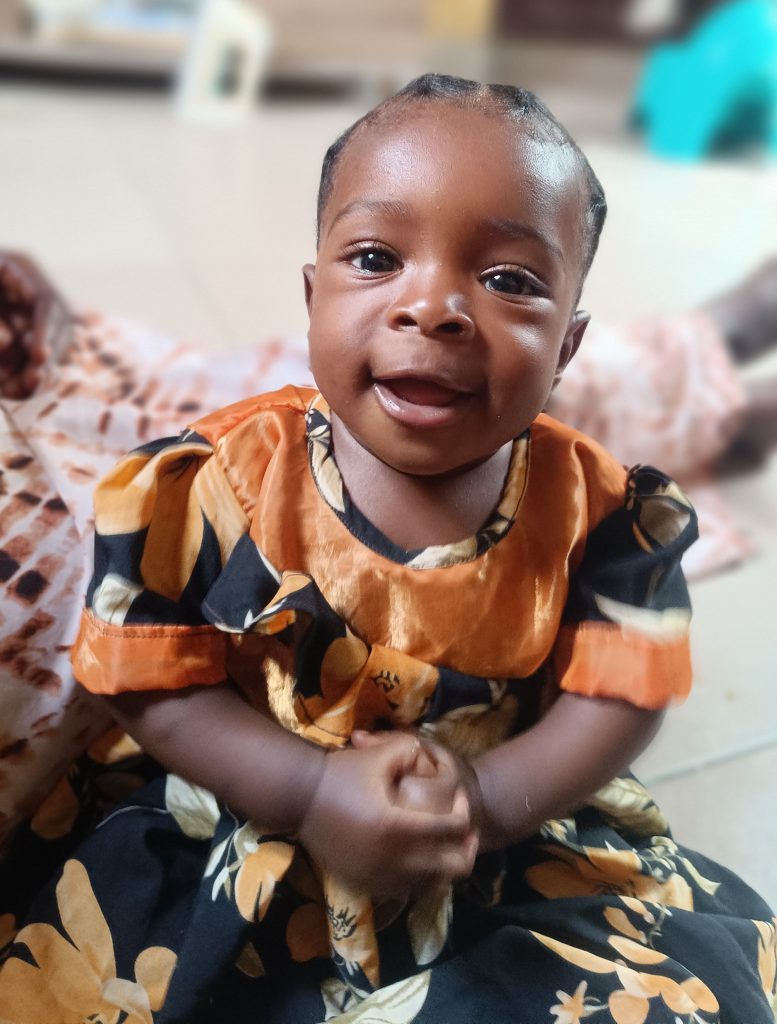
The death of my eight-month-old daughter, Alabidun Rahmah AbdulRahman, is not just a private tragedy; it is a mirror held up to a system that looks impressive on the surface but collapses at the moment it is most needed.
READ ALSO: Nigerian Military Brokers Peace Talks Between Fulani, Tiv Leaders in Benue
On Friday, 23rd January 2026, my daughter was taken to General Hospital Suleja because she was unable to suck breast properly. It did not appear, at first, to be a death sentence. Like many parents, I trusted the judgment of trained professionals. The hospital itself inspired confidence. It is well renovated, neatly structured, and visually reassuring. From the outside, it looks like what a modern government hospital should look like. That appearance, in truth, persuaded me to use it. I believed, as any reasonable citizen would, that a facility that looks ready must surely be ready.
That belief became my greatest regret.
Rahmah was admitted the same day on the claim that her condition required emergency attention. She was taken into the Emergency Pediatric Unit, a designation that suggests urgency, speed, and competence. But what followed was neither urgent nor competent. For over thirteen hours, my daughter lay there in visible discomfort, struggling, crying faintly, weakening by the minute.
During this entire period, no doctor came to see her. The only available doctor was contacted several times by a Nurse. Calls were made. Messages were sent. Appeals were raised. Yet she never showed up, never examined the child, never intervened until she passed away Saturday night.
It is difficult to explain what it feels like to watch a child suffer while help remains just out of reach. Hospitals are supposed to be sanctuaries of hope, places where time matters and minutes are counted with seriousness. But in that Emergency Pediatric Unit in Suleja General Hospital, time became an enemy. Thirteen hours passed like a slow execution.
At some point, sensing danger, I requested that my daughter be transferred to a private hospital. I was ready to bear any cost. That request was not granted. Instead, oxygen was administered, as though oxygen alone could replace diagnosis, treatment, and medical presence. Oxygen became a gesture, not a solution. Sadly, when Rahmah took her last breath, it was not because her condition was incurable. It was because care was absent.
This is where the agony deepens. This was not a dilapidated structure abandoned by government. This was a renovated hospital, one that fits neatly into budget speeches and commissioning photographs. Niger State, since 2023, has consistently announced significant allocations to the health sector. In the 2024 fiscal year, over forty billion naira was earmarked for health, with emphasis on improving facilities, upgrading hospitals, and strengthening service delivery.
In 2025 and into the proposed 2026 budget, health allocations rose even higher, approaching over seventy billion naira, according to official budget presentations. These figures are not rumours; they are public records. They are read aloud in legislative chambers and celebrated in press releases. Yet, standing beside my dying child, those billions meant nothing.
A hospital is not healed by paint, tiles, and glass alone. A renovated building without doctors is like a body without a pulse. General Hospital Suleja may look functional, but inside, it suffers from a shortage that is far more dangerous than cracked walls. The absence of medical personnel, especially during emergencies, is a silent killer. No amount of renovation compensates for a system where doctors can choose not to respond to repeated calls when the needs arise.
Also strangely to me, there is the issue of power. What kind of hospital functions with generator power for barely three hours a day, typically between 8pm and 11pm? In a medical environment, power is not a convenience; it is life itself. Equipment depends on it. Monitoring depends on it. Emergency response depends on it. When power becomes a luxury, care becomes compromised. It is disturbing that in 2026, parents still have to pray for electricity in a government hospital while budgets worth billions are announced yearly.
What hurts most is not just the loss, but the realization that this suffering was avoidable. It was not fate. It was negligence. It was indifference. It was a system that has mastered the art of looking prepared while remaining dangerously hollow.
As a columnist, I have written about governance failures, policy gaps, and institutional decay. I have used statistics and official statements to interrogate power. But nothing prepares you for the moment when those abstract failures become personal. When the child you named, carried, and loved becomes a casualty of the same system you once critiqued from a distance.
I cannot, in good conscience, advise even my enemy to use that hospital again, not because it looks bad, but because looks deceive. The pain of trusting a fine exterior only to encounter fatal emptiness inside is something I would not wish on anyone. Health facilities should not be deceptive showpieces. They should be living systems, staffed, powered, responsive, and humane.
This is not a call for sympathy. It is a demand for honesty. If governments will continue to announce impressive budgets, then citizens deserve impressive outcomes. If hospitals are renovated, they must also be manned. If emergency units exist, they must function as emergencies, not waiting rooms for death. Accountability must move beyond paperwork and reach the ward, the night shift, the unanswered phone call.
Alabidun Rahmah AbdulRahman was eight months old. She was my only daughter. She deserved more than silence, more than delay, more than oxygen without care. She deserved a doctor who would show up.
Some losses change a man forever. This one has changed my writing. The pen is no longer just a tool of commentary; it is now an instrument of mourning and witness. If this column unsettles those who read it, then perhaps it is doing what hospitals like General Hospital Suleja failed to do that day — respond with urgency.
For my daughter, and for every child whose life depends on more than painted walls and budget speeches, this agony must be written, remembered, and acted upon.


