Is Nasir El-Rufai on the Peril?
 0
0
 0
0
Is Nasir El-Rufai on the Peril?
By Alabidun Shuaib AbdulRahman
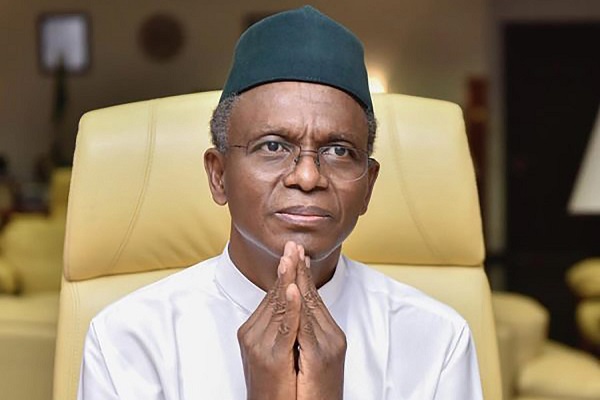
There is something almost Shakespearean about the current phase of Nasir Ahmad El-Rufai’s political journey. Once firmly lodged within Nigeria’s innermost corridors of power, the former governor of Kaduna State now finds himself navigating choppy waters—estranged from elements of the establishment he helped midwife, locked in public disagreements with former allies, and increasingly defined by sharp media interventions rather than executive authority. The question therefore suggests itself with urgency: is Nasir El-Rufai on the peril, politically speaking, or merely repositioning for another audacious ascent?
To answer that, one must first understand the architecture of his rise. El-Rufai has always thrived at the intersection of intellect and insurgency. From his days as Director-General of the Bureau of Public Enterprises to his tenure as Minister of the Federal Capital Territory between 2003 and 2007, he cultivated the persona of a reformer unafraid of entrenched interests. In Abuja, he enforced the capital’s master plan with relentless precision, demolishing structures deemed illegal and digitising land administration through the Abuja Geographic Information System. Admirers saw courage; critics saw cold technocracy. But none doubted his influence.
His political resurrection after years in relative exile was equally strategic. As a central figure in the coalition that birthed the All Progressives Congress in 2013, El-Rufai demonstrated both tactical patience and elite networking. The APC’s 2015 victory was not merely a partisan turnover; it was a reconfiguration of Nigeria’s power map. In securing the governorship of Kaduna State that same year, El-Rufai transitioned from federal reform czar to subnational executive with a mandate to replicate structural transformation.
READ ALSO: TDF Applauds Tinubu Over Swift Implementation of ASUU Agreement
Kaduna was never going to be an easy laboratory. With its near parity of Muslim and Christian populations and a history of sectarian volatility, governance required not only administrative efficiency but also delicate social navigation. El-Rufai chose the path he knew best—structural reform. He implemented a Treasury Single Account to streamline finances, overhauled the civil service, and embarked on sweeping education reforms that culminated in the disengagement of more than 20,000 primary school teachers who failed competency tests. The state borrowed heavily for infrastructure, betting that long-term growth would justify short-term fiscal strain.
To his supporters, these were acts of bold leadership in a polity allergic to tough decisions. To his critics, they revealed a governor more comfortable with spreadsheets than sentiments. Southern Kaduna’s recurrent violence further complicated his record. His insistence on framing the crisis largely as criminality rather than ethno-religious persecution was analytically defensible in some respects, yet politically combustible. Perception hardened into distrust among segments of the population who felt unseen and unheard.
Even so, he secured re-election in 2019, proof that reform and controversy can coexist in Nigeria’s electoral calculus. But it was the transition from governor to elder statesman that has proven most perilous.
El-Rufai entered the 2023 political season as a visible ally of President Bola Tinubu during the APC primaries. His intellectual heft and northern pedigree positioned him as a bridge-builder within the party’s power arithmetic. When Tinubu won the presidency, many assumed El-Rufai would feature prominently in the new administration. His nomination as a minister appeared to confirm that trajectory until the Senate declined to confirm him, reportedly citing security concerns.
In Nigerian politics, symbolism often outweighs substance. The rejection was more than procedural; it signalled a rupture. For a politician accustomed to shaping events rather than reacting to them, the development marked a subtle but unmistakable shift from insider to outsider. Since then, his public commentary has grown more pointed. He has questioned the direction of the ruling party, hinted at betrayals, and portrayed himself as a custodian of principles sidelined by expediency.
Is this evidence of peril or repositioning?
There are at least three dimensions to consider. The first is institutional. El-Rufai no longer controls a state apparatus. Without the leverage of executive office, influence must be exerted through persuasion, coalition-building and narrative framing. This transition is difficult for leaders whose authority was reinforced by command structures. His recent media engagements which implies candid, combative and occasionally accusatory suggest a man recalibrating his tools.
The second dimension is relational. Politics is sustained by networks, and networks are sustained by trust. Reports of mistrusts between El-Rufai and key federal figures, as well as friction with his successor in Kaduna, complicate his positioning. In Kaduna, reviews of past contracts and policies have cast shadows backward, feeding narratives of vendetta on both sides. At the federal level, silence has often met his critiques, a strategy that can either isolate a critic or amplify him, depending on public mood.
The third dimension is strategic. Nigeria’s political elite operates in long cycles. Conversations about 2027 are already underway in quiet rooms. El-Rufai’s national profile, intellectual agility and northern base make him a potential factor in any future coalition calculus. His current dissent may therefore be less about grievance and more about differentiation—an effort to craft an identity distinct from a government facing economic and security headwinds.
Yet peril remains a real possibility. Nigeria’s political memory can be unforgiving. Leaders who overplay their hand risk alienation from both establishment and grassroots. If El-Rufai’s critiques are perceived as personal vendetta rather than principled dissent, his moral capital may erode. Moreover, the electorate has grown increasingly wary of elite quarrels that appear disconnected from everyday hardship. A politician who once sold reform as necessity must now demonstrate empathy as convincingly as efficiency.
Still, history suggests that El-Rufai has often converted adversity into opportunity. After leaving the Obasanjo administration under clouds of controversy, he returned stronger within a new coalition. After early resistance in Kaduna, he consolidated his authority and reshaped the state’s administrative culture. His career has been punctuated by phases of apparent crisis followed by strategic resurgence.
The deeper question may not be whether he is on the peril, but whether Nigeria’s political environment can accommodate his style of engagement. El-Rufai thrives on intellectual contestation and structural overhaul. He is less adept at the slow, conciliatory art of consensus politics. In a federation where legitimacy often rests on accommodation as much as achievement, this imbalance can be costly.
There is also the matter of narrative control. El-Rufai has long been his own chief spokesman, deploying social media and interviews with precision. In the absence of political office as he is currently, narrative becomes power. His recent outbursts once again keep him in the national conversation. Silence would have signified retreat.
So, is Nasir El-Rufai on the peril? The answer is layered. Institutionally, yes—he stands as an outsider in the power structure he once influenced. Relationally, yes—alliances appear strained and rivalries sharpened. Strategically, however, peril can be prelude. In politics, moments of vulnerability often precede recalibration and El-Rufai has always been a master of that.
Ultimately, El-Rufai’s future will hinge on whether he can transform dissent into constructive coalition-building. If he remains defined by grievance, the peril may deepen into isolation. If he channels critique into a broader vision that resonates beyond elite circles, the current turbulence could become a staging ground.
For now, he occupies an ambiguous space: not dethroned, not enthroned; neither silenced nor fully embraced. In that ambiguity lies both danger and possibility. Nasir El-Rufai has built a career on defying expectations. Whether this chapter marks decline or reinvention will depend less on his adversaries than on his capacity to balance conviction with conciliation.
The peril, if it exists, is not merely political. It is existential—the risk that a man defined by reform and combat may struggle in an era demanding reconciliation and breadth. But in Nigeria’s ever-shifting theatre of power, yesterday’s peril can become tomorrow’s platform.
Alabidun is a media practitioner and can be reached via alabidungoldenson@gmail.com