COLUMN: Are Killings in Niger State Beyond Ordinary?
 0
0
 0
0
COLUMN: Are Killings in Niger State Beyond Ordinary?
By Alabidun Shuaib AbdulRahman
I have been deeply disturbed by what has been happening in Niger State in recent times. The killings. The riots. The abductions. The deaths of people who, in many cases, were simply caught in circumstances they neither created nor could control.
But the real cause for concern may no longer be the frequency of the killings alone. It is the changing character of the violence, the places in which it is unfolding, the different categories of people now being caught in its path and, perhaps most troublingly, the growing difficulty of explaining each incident as an isolated event.
Something appears to be changing in Niger State. The violence is no longer confined to a familiar pattern or a predictable set of locations. It is beginning to assume a wider and more disturbing character, one that demands that we look beyond individual incidents.
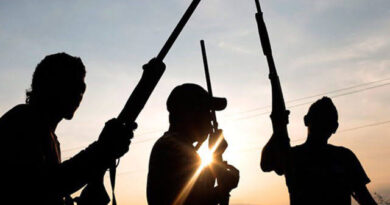
It is disturbing, of late, to see how differently violence is manifesting across Niger State. In one part of the state, terrorists are killing security personnel and civilians. In another, communities are settling old grievances with blood. Elsewhere, worshippers are abducted after prayers. Then, just a few days ago, 37 suspected illegal miners die while in the custody of a government security agency.
READ ALSO: Again, TCN maintenance to disrupt power supply in Abuja communities
Each incident may have its own immediate explanation. But when these events are placed side by side, they begin to reveal a pattern that is difficult to dismiss as ordinary insecurity. They point to a deeper crisis in which violence is taking different forms, affecting different communities and involving different actors, yet producing the same devastating consequence: the steady erosion of the value of human life and the state’s ability to protect it.
Niger State has lived with banditry, kidnapping and communal violence for years, particularly in parts of Shiroro, Rafi, Munya, Mariga and other vulnerable areas. But 2026 has brought a succession of incidents that should make any serious observer pause.
On April 9, reports emerged of coordinated attacks in Shiroro Local Government Area in which scores of people were killed. Premium Times reported that at least 60 people, including more than 40 security operatives, were reportedly killed in attacks on communities including Bagna and Lanta. Although the details varied between accounts, but the central fact was difficult to ignore: armed men were able to attack several communities and inflict heavy casualties on both civilians and those deployed to protect them.
The disastrous event of Shiroro goes beyond the number of casualties. On many occasions, residents of the area have complained about the difficulty of getting timely security intervention whenever armed men move into their communities. The problem is not merely that criminals possess weapons. It is that rural communities are often separated from effective security response by bad roads, difficult terrain, inadequate communication and the sheer size of the state.
Then came the violence around Tegina in Rafi Local Government Area. On July 1, Premium Times reported that at least 48 people had been killed in violence involving Fulani and Kamuku communities. Residents said 42 people, largely women, children and elderly persons, were killed in an attack on a Kamuku community, while about six herders were subsequently killed in retaliation. The incident was particularly disturbing because it demonstrated how quickly communal grievances can become a cycle in which one death produces another. Once that cycle begins, the state is no longer dealing with one criminal incident. It is dealing with the gradual destruction of trust between communities.
But the August attacks in Borgu Local Government Area brought another dimension to the crisis. On August 21, armed men attacked communities during Friday prayers and abducted Muslim worshippers. The eventual account from the local government chairman, Mohammed Abdullahi, was that more than 60 people had been abducted across four villages and nearly 30 killed. The affected communities included Gbeji, Kpenya, Giyan Gbasu and Dekara. The fact that the victims were gathered for Jumaat prayers made the incident particularly disturbing, but it also exposed how far insecurity has penetrated ordinary life. Places of worship, which should represent sanctuary, are not immune. Villagers cannot assume that gathering for prayer will protect them from armed men.
The Borgu attack also exposed the practical weakness of the state’s security response. Difficult terrain and a damaged bridge were cited among the obstacles confronting security personnel. That may be a genuine operational problem, but it raises another question: if authorities know that communities are isolated by terrain and infrastructure, what preventive arrangements exist for those communities? Security cannot always depend on a distress call followed by a journey through impassable roads. Intelligence, local surveillance, communication networks and rapid-response arrangements are supposed to compensate for precisely these weaknesses. When they do not, citizens are left to hope that the attackers will not come.
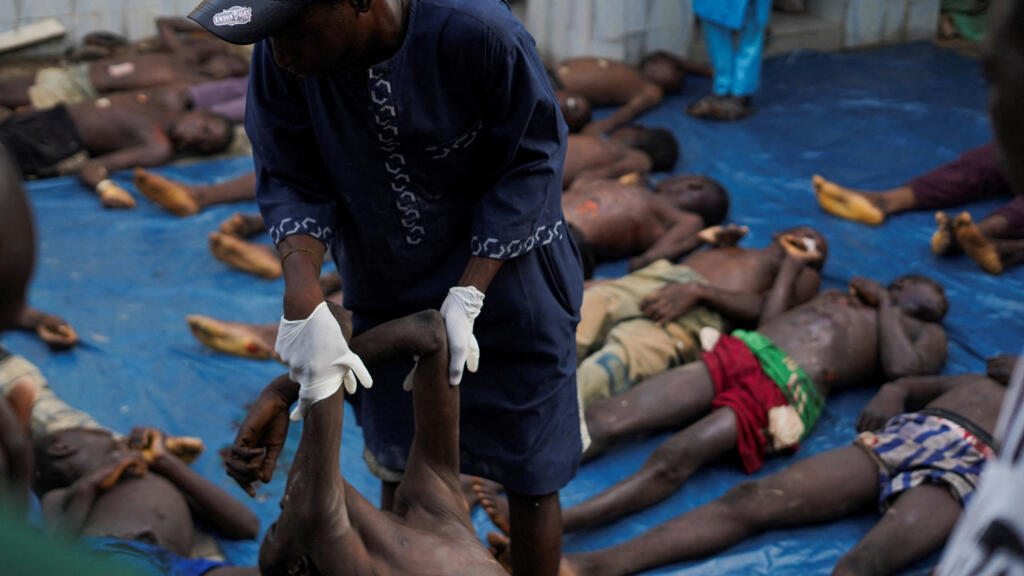
Strangely, the deaths of 37 suspected illegal miners in NSCDC custody on September 17 have changed the character of the conversation entirely. According to the NSCDC, the victims were among scores of people arrested during enforcement operations against suspected illegal mining at the M.I. Wushishi/Lukoto axis on September 15 and 16. The corps initially said the detainees were found dead after what it described as a suspected disease outbreak, while stressing that the actual cause had not been established and would require medical examination.
That explanation cannot simply be accepted or rejected before the investigation is completed. Governor Mohammed Umaru Bago has ordered forensic examinations and autopsies, while the police, NSCDC and other security agencies have opened investigations. The Federal Government has also suspended the Niger State NSCDC Commandant, Suberu Siyaka Aniviye, pending the outcome of the investigation. There have been allegations from relatives and other sources about overcrowding, poor detention conditions and possible mistreatment, but those allegations must be established by evidence. At this stage, the scientifically established cause of the 37 deaths is still pending.
That caution, however, should not diminish the seriousness of what happened. Thirty-seven people did not die in a battlefield. They died after being arrested and taken into the custody of a government security organisation. The state therefore has a heightened responsibility to explain, with evidence, what happened between the moment of arrest and the moment their bodies were taken to the mortuary. Were they medically screened when arrested? How many people were held in the detention facility? How long were they there? What did they eat and drink? Was there ventilation? Was medical assistance available? Were any of them sick before their arrest? Were hazardous substances associated with mining involved? Were there minors among them? These are not questions for social media speculation. They are questions that a credible investigation must answer.
Governor Bago himself said possible causes being examined included suffocation from overcrowding and exposure to hazardous chemicals associated with illegal mining, while cautioning that no conclusion should be reached before forensic and medical examinations were completed. That is the right approach. The tragedy should not become another occasion for competing political narratives to outrun evidence.
But there is a larger issue here that Niger State cannot afford to overlook. The state is dealing simultaneously with armed insurgents, banditry, communal violence, illegal mining and growing public distrust. These are not entirely unrelated problems. Illegal mining, for instance, is not simply an environmental or economic offence when it takes place in insecure areas. Mining sites can become sources of informal wealth, weapons, local influence and criminal networks. Communities struggling with poverty may depend on the activity even when government considers it illegal. Security agencies then arrive to enforce the law, often in places where trust between residents and authorities is already weak. The possibility of conflict is therefore high.
This is why the deaths in NSCDC custody deserve an investigation that goes beyond finding one or two individuals to blame. The country has seen too many official inquiries become exercises in administrative containment. A commandant is suspended, a committee is announced, condolences are issued and, after public attention moves elsewhere, the families are left with questions. Niger State should not allow this case to follow that familiar path.
If the detainees died from disease, the investigation should establish what disease, how it spread, whether it was detectable and whether reasonable medical precautions were taken. If overcrowding contributed, somebody must answer for the decision to keep so many people in unsuitable conditions. If toxic exposure contributed, the circumstances of the arrests and detention must be examined. If there was negligence or deliberate abuse, those responsible should face the law.
The same seriousness is required in the fight against the armed groups terrorising rural communities in the state. It is not enough to announce that troops have been deployed after another village has been attacked. Niger State is too large and too strategically important to be treated as a collection of isolated rural emergencies. Its proximity to the Federal Capital Territory, its international boundary with Benin Republic, its vast forests and its extensive rural settlements make its security problems a national concern.
The temptation will be to treat each tragedy separately. The Shiroro killings will be classified as terrorism. The Tegina violence will be described as a farmers-herders or communal clash. The Borgu deaths will be treated as another kidnapping incident. The NSCDC deaths will be called an unfortunate detention tragedy. Technically, those descriptions may be correct. But they cannot stop at classification. The real responsibility is to understand why so many different forms of violence are flourishing within the same geographical space.
There is also a danger in allowing residents to become accustomed to death. When a community loses ten people, the next community loses twenty, another loses forty, and then dozens die in custody, society can gradually develop a frightening tolerance for casualty figures. That is perhaps the most dangerous stage of a security crisis. Numbers begin to replace human beings. Thirty dead becomes a headline. Forty-eight becomes another headline. Sixty becomes another statistic. Yet behind every figure is a family, a household, a child, a livelihood and a future that has been abruptly removed.
Niger State should therefore resist the urge to normalise what is happening. These killings may have different immediate causes, but their cumulative effect is the same: they weaken citizens’ confidence that the state can protect life. That confidence is not restored by press statements. It is restored when communities see attackers arrested, when victims receive justice, when intelligence prevents attacks, when security personnel are held accountable for misconduct and when people taken into custody return alive to their families.
The question, therefore, is not whether every killing in Niger State has one hidden explanation. There is no evidence to support such a conclusion. The more credible concern is that the state is facing several overlapping failures at once, and each failure makes the others harder to contain. Terrorism creates displacement. Displacement creates economic hardship. Economic hardship can deepen dependence on illegal activities. Communal killings produce revenge. Weak institutional trust encourages rumours and vigilantism.
That is why the 37 deaths in NSCDC custody cannot be treated as an unrelated footnote to the wider security crisis. Neither should the killing of Muslim worshippers in Borgu be dismissed as just another kidnapping. Both incidents raise the same fundamental issue from different directions: what value does the Nigerian state place on the life of the ordinary person when that person is outside the protection of privilege?
For Niger State, the answer must now be demonstrated, not merely spoken. The dead deserve more than condolences. The families deserve facts. The communities living under the shadow of terrorists and bandits deserve protection. Those detained by security agencies deserve humane treatment, regardless of the offence for which they are suspected. And the institutions entrusted with keeping people safe must understand that accountability is not an obstacle to security; it is part of security.
Perhaps that is what makes the events of 2026 so troubling. Niger State is not experiencing one crisis. It is experiencing a convergence of crises. Until government confronts that reality with the same urgency with which it responds to individual attacks, the killings will continue to look like separate tragedies when, in fact, they are becoming chapters of the same larger story.
Alabidun is a media practitioner and can be reached via alabidungoldenson@gmail.com