Beyond A Defence Minister
 0
0
 0
0
Beyond A Defence Minister
By Alabidun Shuaib AbdulRahman
When the name of General Christopher Gwabin Musa (rtd) was announced as the new Minister of Defence for Nigeria, many citizens did not cheer — they exhaled. In a country where hope often flickers faster than security, each new appointment carries the burden of history. Nigerians are tired of seeing ministers swap titles, while insecurity deepens, kidnappings proliferate, and communities collapse.
To understand the challenge he inherits, one must revisit the history of Nigeria’s Defence Ministry from 1999 onward. The first in the Fourth Republic was retired Lieutenant-General Theophilus Yakubu Danjuma, who assumed office in June 1999 after democracy was restored. Danjuma’s appointment was meant to restore honour and discipline to a military tainted by years of dictatorship. His immediate task was political: reassure Nigerians that the Armed Forces would no longer be politics by another name, and help transition from military rule to civilian governance. He helped steer budgets toward rebuilding and re-equipping, initiating what was then a credible attempt at professionalising Nigeria’s armed forces. But those efforts addressed conventional defence, not the emerging internal threats. Danjuma’s tenure ended in May 2003 with the civilianization of leadership but by then the foundations for internal security challenge management remained shallow.
READ ALSO: Coup in Benin as Soldiers Seize TV Station
In July 2003, Rabiu Musa Kwankwaso became Defence Minister under President Obasanjo’s second term, and thus inaugurated an era of civilian political stewardship at the Ministry of Defence. His time, stretching to May 2007, coincided with the earliest stirrings of what would become insurgency. Boko Haram was still marginal, largely ignored by national security architecture focused on external defence. Kwankwaso’s strengths lay in politics and governance, but not in shaping a doctrinal shift toward internal security or insurgency response. The defence ministry under him remained oriented toward traditional armed-forces metrics of equipment, formal deployments, diplomacy while Nigeria lurched toward a reality that required intelligence-driven, community-rooted internal security frameworks.
When Mahmud Yayale Ahmed took over in July 2007 and served until September 2008, the writing was already on the wall. Boko Haram had begun to emerge visibly, yet the response remained bureaucratic. Yayale Ahmed brought civil-service credentials and an administrative mindset, not military temperament. The ministry managed procurement, sustained the flagging morale of the forces after years of underfunding, but did little to evolve institutional capacity for asymmetric threats.
By late 2008 and early 2009, under Shettima Mustapha and subsequently the retired Major-General Godwin Abbe, Nigeria entered what would become its darkest chapter of internal insecurity. In 2009, Boko Haram erupted violently. Abbe, a former soldier turned politician, presided during the crescendo of that crisis. The response was drastic but superficial: raids, crackdowns, mass arrests, but little reckoning with root causes. Communities were ravaged, trust was eroded, animosity deepened between the security forces and civilians. The violence may have been met with force, yet the underlying grievances, intelligence failures and governance vacuums were never addressed. The result was predictable: suppression bred resentment, insurgency morphed and scattered, later to resurge with renewed vigour.
When the baton passed to civilian ministers Adetokunbo Kayode (2010–2011), Haliru Mohammed Bello (2011–2012), and Olusola Obada (2012–2013), Nigeria sank deeper into chronic internal instability. Their tenures focused largely on procurement, revitalizing weapon stocks and administrative reshuffles, rather than systemic overhaul. There were no comprehensive reforms of policing, no robust intelligence-sharing across agencies, no serious investment in community-based early-warning or conflict-prevention mechanisms. Some may have tried to manage manpower, restructure departments or buy equipment, but the enemy had changed: asymmetric war, civilian-targeted violence, kidnapping rings, banditry, communal conflicts. The Ministry remained geared for conventional threats. As a result, Nigeria drifted.
A temporary caretaker period under Labaran Maku (2013–2014) barely registered any shift. Then came a moment of cautious optimism. Aliyu Mohammed Gusau, whose career spanned multiple security and intelligence roles, was appointed Defence Minister in March 2014. His background and reputation suggested a possible turning point: here was a man who understood threats beyond the battlefield. He attempted, in the brief span he held office, to emphasise intelligence coordination, inter-agency cooperation, and reform of structural leakages. But insurgency had already scaled across regions; Boko Haram had splintered, and the patience and capacity were thin. Gusau’s efforts lacked political depth and time. When his tenure ended in May 2015, so too did the hopes of seeing a decisive shift from reactive force to preventive security architecture.
Under subsequent ministers Mansur Mohammed Dan-Ali (2015–2019) and retired Major-General Bashir Salihi Magashi (2019–2023), the tendency again was toward kinetics, procurement, routine operations — heavy-handed responses to terror strikes, bandit raids, kidnappings. The Armed Forces regained some currency; there were operations, there were “victories,” and sometimes media reports of dislodged cells or rescued hostages. But the casualty was strategic consistency. The underlying problems: weak policing institutions, uncoordinated intelligence between state and federal agencies, porous borders, and a civilian security vacuum. Without credible law enforcement reforms, social rehabilitation and community engagement, cleared zones relapsed. Violence remained endemic.
When President Bola Ahmed Tinubu picked Mohammed Badaru Abubakar, a former two-term governor as Defence Minister in August 2023, many hoped that his executive political experience would at last shapeshift national security policy. But reality proved more unforgiving than expectation. By November 2025, Nigeria had witnessed mass kidnappings, schoolchildren abducted en masse, rural communities under siege, and public confidence crumbling. On November 26, President Tinubu declared a nationwide security emergency, ordering mass recruitment into police and army ranks and authorizing new deployments of forest guards to flush out terrorists and bandits from remote hideouts. The aim was to inject manpower; but as many analysts warned, manpower without structural reform is like pouring water into a leaking pot. On December 1, 2025, Badaru resigned reportedly on health grounds.
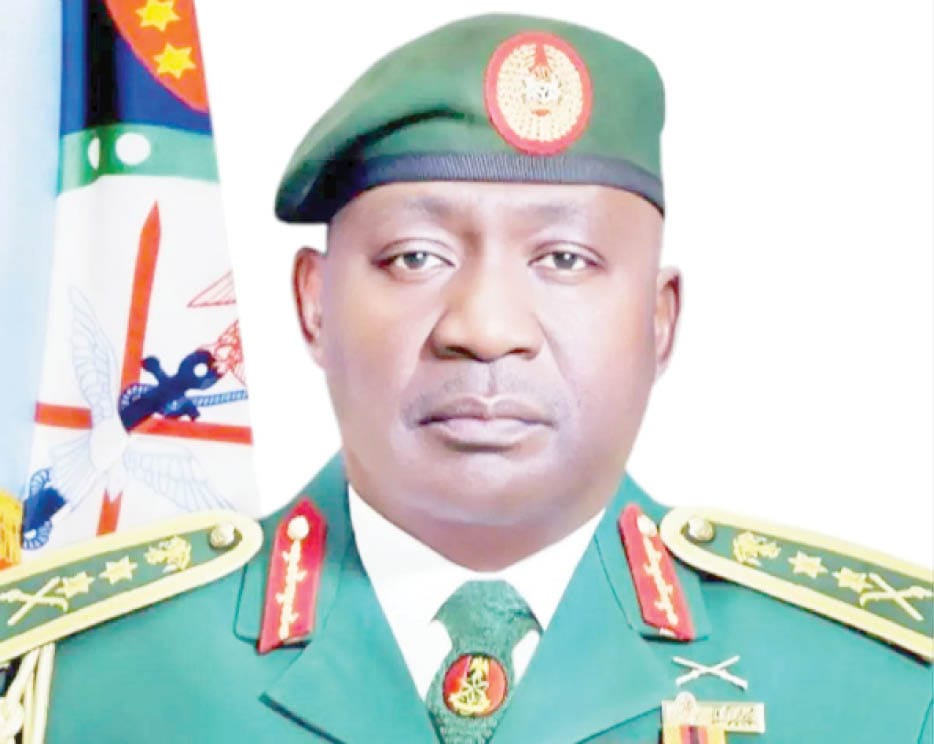
The very next day, on December 2, President Tinubu nominated retired General Christopher Gwabin Musa as Minister of Defence. Musa had served as Chief of Defence Staff from 2023 until October 2025, when he was relieved in a wide-ranging military shake-up. His record is impeccable: commissioned as Second Lieutenant in 1991 after graduating from the Nigerian Defence Academy, Musa rose steadily through command ranks, served in key operational theatres, including as Theatre Commander in counter-insurgency campaigns and won the Colin Powell Award for Soldiering in 2012.
This appointment represents more than a change of guard; it presents a crossroads. For generations, Nigeria’s Defence Ministry oscillated between procurement-focused bureaucracy and reactive operations. The missing link was always a coherent, nationwide internal security doctrine, one that recognises terrorism, banditry, kidnapping, communal wars and urban criminality as equal or greater threats than cross-border war. Musa may be the man with the credentials; but credentials do not automatically translate to success. For that, he will need more than a uniform, he will need vision, political courage, and structural reengineering.
First, intelligence in Nigeria has long been a patchwork of agencies: military intelligence, police Special Branch, state-level vigilante networks, local community informants, and often unofficial actors. Every Defence Minister since 1999 has inherited this fragmentation. Even when ministers like Aliyu Gusau explicitly prioritized intelligence reform, they lacked either the time, political backing, or institutional leverage to bind these threads into a functional national network. Under Musa, Nigeria must build a real Intelligence Fusion Centre, statutory in law, resourced, and empowered to gather, analyse, and share data across all security agencies. It should not be another office with flowery titles; it must be the beating heart of Nigeria’s security architecture.
Second, Nigeria’s policing and internal security apparatus remain dangerously under-developed. The police are overstretched or mis-deployed; conventional policing capacities are weak; law enforcement is uneven across states or non-existent in many rural areas. In effect, the military ends up policing civilians, a recipe for human rights violations, community alienation, and cycles of violence. Musa must use his credibility both as military man and now Defence Minister to push for statutory police reform, to support state-level policing initiatives, and to redefine roles: the military defends the country externally and responds to exceptional internal crises; the police and civil security agencies maintain daily law enforcement and community protection. That might require political negotiation with governors and lawmakers.
Third, Nigeria must stop treating security as a matter of fire-power and weapons. As urban kidnappings show, and as rural banditry and communal conflicts prove, contemporary insecurity thrives on mobility, networks, subversion, infiltration, and terror. The new minister should prioritise modern security tools: drones for surveillance, communication-intercept (COMINT and SIGINT) capacity, special forces trained in counter-terror, local informant networks, rapid reaction units — small, mobile, intelligence-driven. Big tank brigades and conventional formations have their place; but they are blunt instruments in a country where threats can strike schools at night and vanish into forests by dawn.
Even military brilliance alone will fail if it remains disconnected from society. Nigeria’s security problems are deeply structural: poverty, social dislocation, youth unemployment, weak institutions, poor governance, inter-communal crises, land conflicts, ethnic and religious fractures. Every military advance that does not come with social stabilization — resettlement of displaced persons, rebuilding of schools, reviving of farms and markets, psychosocial support, community reconciliation — simply displaces the problem. The new Defence Minister must insist that security operations be paired with civil-affairs initiatives: resettlement, restoration, rebuilding.
Finally, the Ministry must embrace transparency and result-oriented reporting. For too long, Nigerians have depended on headlines: “Bandits killed,” “Scores of terrorists neutralised,” “Villages liberated.” But those headlines rarely translate into lasting security. The public needs measurable outcomes: fewer kidnappings, fewer mass attacks, safer roads, resettled communities, functioning markets, schools reopened, return of displaced people.
General Musa steps into office at a critical moment: the presidency has just declared a nationwide security emergency; recruitment into police and army forces has been ordered; forest guards are to be deployed, and VIP-protection officers are to be redeployed to frontier duties. These are signals that the government finally acknowledges the scale of the crisis, but manpower without structure is no answer.
If Musa gets it right, this appointment could mark the beginning of a long overdue transformation. If he fails, the nation risks descending deeper into despair: more missing schoolchildren, more displaced families, more ghost towns.
Nigeria does not need another Defence Minister. What Nigeria needs is a Defence Minister who is also an architect of a new national security system: one that integrates intelligence, law enforcement, civil protection, social support, governance and accountability. The war to reclaim Nigeria’s peace is no longer just on the battlefield but in institutions, in policies, in communities, and in hearts.
Gen. Christopher Gwabin Musa (rtd) now carries the weight of that history. If he can convert his military credentials into strategic reforms, if he can lead with vision, then he may offer Nigeria more than hope: a path to security; a chance at peace.
Alabidun is a media practitioner and can be reached via alabidungoldenson@gmail.com