
Insecurity: Defence, Development, and Duty
 0
0
 0
0
Insecurity: Defence, Development, and Duty
By Alabidun Shuaib AbdulRahman
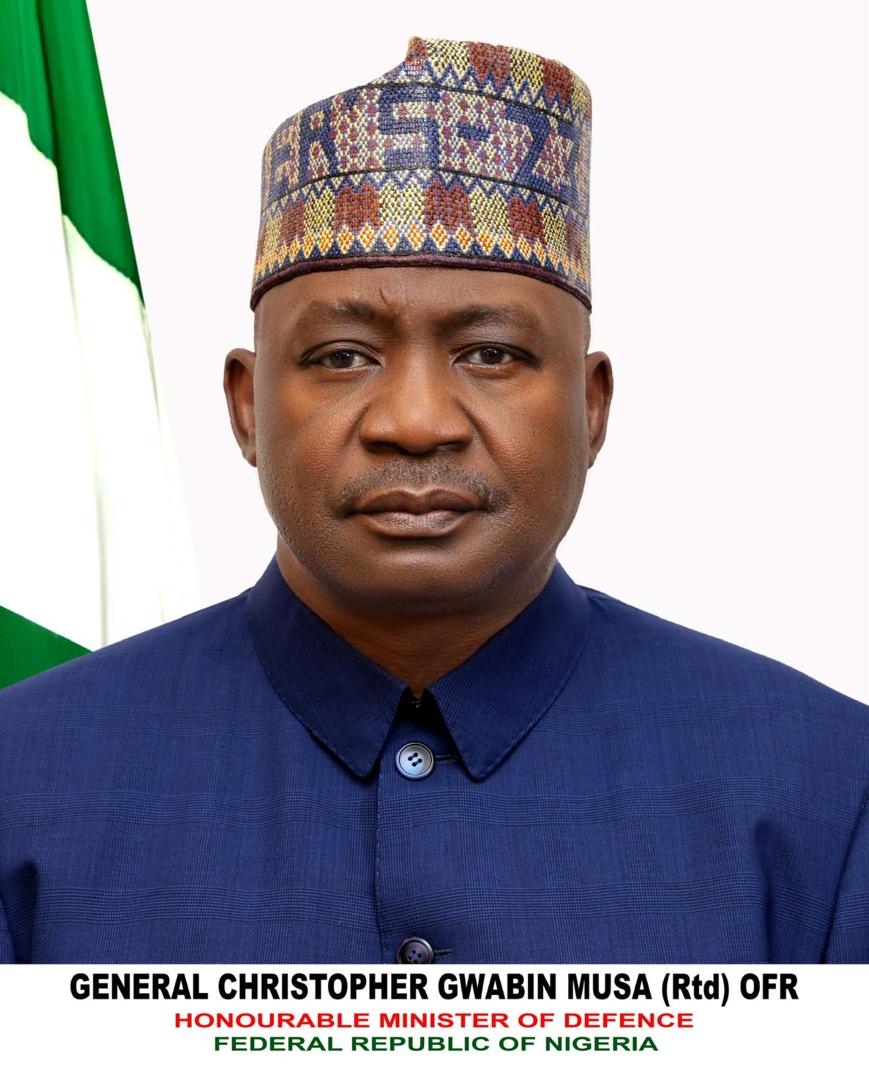
Last week, this column examined the need for Nigeria to go beyond the symbolic appointment of a Defence Minister and to embrace a more strategic, coherent and results‑oriented national security policy. With the Honourable Minister of Defence, General Christopher Gabwin Musa (rtd) now sworn in and formally at his desk, the expectations of Nigerians have understandably risen. Citizens are no longer satisfied with promises that go unfulfilled, rhetoric without measurable results, or military engagements that deliver ephemeral victories without sustainable impact. The scale of the challenge is immense, and to effectively confront insecurity in all its dimensions requires a realistic blueprint that is rooted in global experience but fully adapted to our domestic realities.
The current insecurity landscape in Nigeria is not confined to a single theatre of operation. It encompasses violent extremism in the Northeast involving Boko Haram and Islamic State West Africa Province (ISWAP) factions; widespread banditry and cattle rustling across the Northwest; mass kidnappings for ransom that have spread into Central and Southern states; maritime piracy and sea robbery; farmers‑herders clashes in the Middle Belt; and criminal syndicates operating along transport corridors. These threats are not isolated, and they share common vectors that exploit governance gaps, economic deprivation, porous borders, and community distrust of state institutions. The sheer breadth of this insecurity crisis has made it clear that conventional, ad hoc responses will not suffice. What Nigeria requires now is a comprehensive, intelligence‑driven approach that integrates defence, internal security, economic development, and community empowerment.
READ ALSO: Dangote Says PMS to Sell Below N740/Litre as Refinery Cuts Price
The experience of other countries that have confronted similar threats offers instructive lessons. Nations that have made progress in countering terrorism and organised crime have done so by strengthening intelligence structures, integrating technology into security operations, building trust with local communities, and coordinating interagency responses. The United Kingdom’s counter‑terrorism framework, known as CONTEST, was first developed in 2003 by Sir David Omand at the Home Office in response to the 2001 9/11 attacks. It has been revised in 2006, 2009, 2011, 2018, and most recently in July 2023 to address evolving threats. CONTEST’s four pillars — Prevent, Pursue, Protect and Prepare — aim to safeguard UK citizens and infrastructure. Between 2018 and 2023, nine terrorist attacks were declared in the UK, resulting in six deaths and about 20 injuries, while law enforcement agencies disrupted 39 late-stage terrorist plots before they could be executed. The Counter-Terrorism and Security Act 2019, introduced by then Home Secretary Sajid Javid and receiving Royal Assent on 12 February 2019, further strengthened UK powers at ports, borders, and in counter‑terrorism investigations. These measures reiterate the importance of intelligence integration and pre-emptive action, lessons highly relevant to Nigeria’s own security planning.
Spain’s experience with ETA (Euskadi Ta Askatasuna) provides another instructive example. ETA was responsible for hundreds of deaths over decades before declaring a definitive cessation of armed activity in 2011 and formally dissolving its structure in May 2018. French and Spanish security cooperation played a decisive role in degrading ETA’s networks throughout the 2000s and 2010s, alongside judicial and intelligence reforms after the 2004 Madrid train bombings. Historical estimates attribute between 830 and 857 killings to ETA, illustrating both the human cost of insurgency and the impact of sustained counter-terrorism measures led by state intelligence agencies. Spain’s Ministry of Interior and Counter-Terrorism Intelligence Centre continues to coordinate post-ETA security strategies, reflecting the necessity of ongoing vigilance even after apparent victories.
Saudi Arabia has also demonstrated the impact of a coordinated, high-level counter-terrorism approach. In 2005, the Kingdom hosted the first International Counter-Terrorism Conference in Riyadh, attended by over 55 countries, resulting in the establishment of the United Nations Counter-Terrorism Centre (UNCCT) with Saudi financial support of US$110 million to assist countries in combating terrorism. Further, in February 2014, King Abdullah issued a royal decree reinforcing counter-terrorism measures, stating that participation in extremist or terrorist activities would not be tolerated, reflecting a strong political commitment to national and global security. According to the Global Terrorism Index, Saudi Arabia’s terrorism impact score declined significantly over the past decade, demonstrating the effectiveness of combined intelligence, legislative, and operational measures.
The Global Terrorism Index (GTI), published annually by the Institute for Economics and Peace, provides a reliable benchmark for assessing global terrorism trends. The 2025 GTI reported that 66 countries recorded terrorist attacks in 2024, up from 58 the previous year, indicating the persistent and shifting nature of the threat. The Sahel region accounted for more than half of global terrorism-related deaths, while lone-wolf and extremist-inspired attacks increased in Western countries. These data underline that counter-terrorism outcomes depend on sustained political will, integrated agency action, and community engagement, lessons, again, that are directly applicable to Nigeria.
In Nigeria, security responses have frequently been reactive. Major operations are mounted after attacks have occurred, rather than through proactive disruption of networks and early interdiction of planned activities. To shift this paradigm, the Defence Ministry under General Christopher Gabwin Musa must prioritise the establishment of a National Intelligence Fusion Centre. Such a centre would integrate data from the military, police, Department of State Services, National Security Adviser’s office, customs, immigration, and digital surveillance units into a single analytic platform. This would enable real-time situational awareness, more accurate threat forecasting, and faster decision-making. A national counter-terrorism database accessible to all relevant agencies, with robust legal protections for privacy and civil liberties, would serve as the cornerstone of this integrated architecture.
Border security is another area where strategic emphasis must be placed. Many militant and criminal groups operating in Nigeria exploit porous borders with neighbouring countries. These transnational linkages facilitate the movement of fighters, weapons, contraband, and illicit funds. The Economic Community of West African States (ECOWAS) has recognised this regional dynamic and proposed a 5,000-member standby force to respond rapidly to insecurity across member states at an estimated first-year cost of $2.61 billion. Nigeria must not only support and participate in regional frameworks but must also strengthen its own border control mechanisms. Smart border technologies such as biometric identification systems, integrated customs and immigration databases, and joint patrols with neighbouring states would make significant inroads into restricting unauthorised movements. Additionally, aerial and satellite surveillance over key migratory and smuggling corridors would enhance the country’s ability to detect and intercept threats before they materialise. Stronger border security disrupts the flow of armed groups, weapons, and contraband while protecting economic zones and encouraging lawful trade.
A critical deficiency in Nigeria’s current security approach has been the disconnect between national forces and local communities. In areas affected by violent extremism and banditry, many communities feel abandoned or marginalised. This creates fertile ground for violent actors to gain influence by positioning themselves as protectors or providers of services. The rise of community security networks such as the Civilian Joint Task Force in the Northeast and Amotekun in the Southwest offers a promising model for localised engagement. These groups have provided valuable situational insights, early warning reporting, and rapid response capabilities. But their informal status limits their effectiveness. What is needed is a nationally coordinated framework that formally integrates community security structures into the broader security architecture, with clear legal status, standardised training, dedicated resources, and oversight mechanisms that ensure accountability and respect for human rights. Empowered, community-embedded security actors can act as force multipliers, strengthening the reach of formal security agencies and building trust between citizens and the state.
Technology must be at the heart of Nigeria’s future security efforts. Modern conflicts are increasingly shaped by information, surveillance, and real-time connectivity. Drones, Intelligence Surveillance and Reconnaissance (ISR) platforms, secure communication networks, and artificial intelligence tools for pattern detection can transform the operational footprint of security agencies. For a country with vast territories that are difficult to monitor through ground forces alone, investing in long-endurance drones and satellite imagery agreements would provide crucial surveillance coverage. Integrating AI-enabled systems to analyse movement patterns, social media signals, and financial flows linked to criminal networks can alert authorities to emerging threats before they materialise into attacks. These investments should be accompanied by specialised training for personnel to interpret and act on the data generated by these systems. In this way, technology amplifies human capacity and creates a more agile, responsive defence posture.
Civil-military relations also demand urgent attention like never before. The pattern of military engagements that yield high collateral damage or disregard human rights has undermined public confidence. Nigeria’s military must adopt what is often referred to in strategic circles as a “hearts and minds” approach. This means that operations should be conducted with strict adherence to the rule of law, with proactive measures to minimise harm to civilians, and with structured engagement mechanisms that involve traditional leaders, local influencers, and civil society organisations.
Socio-economic development must be integrated into the security agenda. One of the principal drivers of recruitment into violent groups is the lack of opportunity for youth. Unemployment remains high, especially in regions most affected by insecurity. If young people have little access to quality education, job opportunities, or even a sense of hope for the future, the appeal of violent groups offering financial incentives and a sense of belonging increases. Therefore, national security policy must be coordinated with economic planning. Ministries of Defence, Interior, Youth Development, Finance, and regional development agencies must work with the private sector to design vocational training programmes, micro-enterprise support schemes, agricultural revitalisation initiatives, and infrastructure projects that create sustainable livelihoods in vulnerable communities. Security will not be sustainable where economic despair persists.
Transparency and accountability in the security sector are also essential. Nigerians are weary of high defence budgets that appear disconnected from tangible results. Defence spending must be accompanied by transparent reporting, independent oversight, and measurable performance outcomes. The creation of parliamentary defence committees with access to classified expenditure details has precedent in mature democracies and can be adapted to Nigeria’s context. Civil society organisations, human rights bodies, and the media must be permitted, within legal frameworks, to scrutinise defence policies and operations. When citizens see that resources are managed responsibly and that abuses are addressed decisively, trust in the security apparatus increases, and cooperation improves.
Nigeria’s role in regional security cooperation cannot be overstated. The threats that afflict the country are not confined to its borders. Maritime piracy in the Gulf of Guinea, cross-border banditry, extremist networks with regional affiliates, and smuggling syndicates operate across national frontiers. Nigeria must lead, not only in rhetoric but in structured collaborative action through regional bodies such as ECOWAS and the African Union. Joint training programmes, intelligence sharing agreements, coordinated patrols, and unified response protocols can dramatically improve collective capacity to deal with transnational threats. However, such cooperation must be accompanied by clear understanding of command responsibilities, funding mechanisms, and the primacy of human rights in operational engagements.
Within the next twelve to twenty-four months, a well-executed security blueprint based on the principles outlined can deliver measurable improvements. Reduced terror-related fatalities, fewer mass kidnappings, restored confidence in security forces, and renewed economic activity in previously conflict-impacted areas would serve as tangible indicators of progress. Most importantly, strengthened cooperation between federal and state security agencies and enhanced trust with communities will lay the foundation for longer-term stability.
Nigeria stands at a crossroads. The Defence Ministry now has the opportunity to transform the nation’s security architecture, not through isolated campaigns or fleeting headlines, but through a sustained, integrated, people-centred strategy. Ending insecurity in Nigeria is not merely a Defence Ministry task. It is a national imperative that demands political will, inter-governmental coordination, community partnership, and structural reform. The people of this country deserve not merely promises but results. It is time for leadership that does more than respond to insecurity; it is time for leadership that contains, mitigates, and ultimately overcomes it. Nigeria’s future depends on it.
Alabidun is a media practitioner and can be reached via alabidungoldenson@gmail.com


