Atiku, Why Again? By Alabidun Shuaib AbdulRahman
 0
0
 0
0
Atiku, Why Again? By Alabidun Shuaib AbdulRahman
In Nigerian politics, ambition is not unusual. Neither is persistence. But when a politician has been on the presidential ballot for several years without success, it is fair to ask a simple question: what is the plan this time that was not there before?
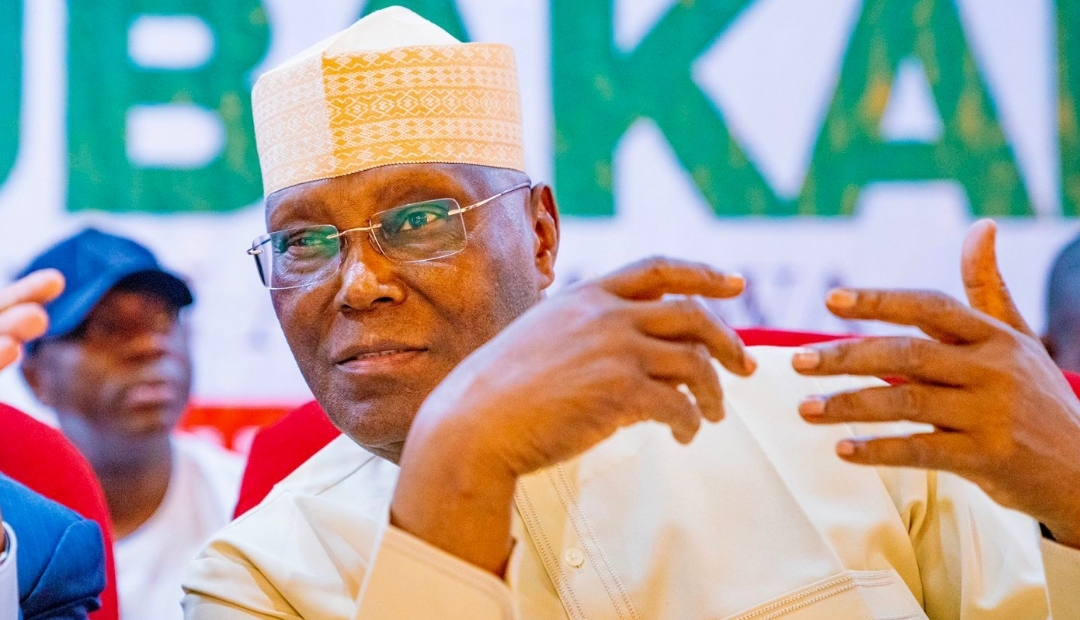
That question has come up again after the recent television interview by Atiku Abubakar, where he made it clear that he intends to run for president in 2027. If he does, it will be his seventh attempt.
The interview, aired on ARISE TV on Wednesday, April 15th, was meant to position him as a leading figure in the opposition ahead of the next election. Instead, it has brought back old doubts about his long political journey, his repeated attempts, and whether anything has really changed.
Atiku did not present his ambition as something he was still considering. He spoke as someone already committed to the race. He also described the 2027 election as his “last outing,” suggesting that this would be his final attempt.
READ ALSO: Kwara North Youths Endorse Araba for 2027 governorship
At the same time, he tried to balance two positions. He said he was open to working with others in a coalition under the African Democratic Congress (ADC). But he also made it clear that he would contest for the ticket and would not step aside for anyone, including Peter Obi, Kwankwaso and others.
That position is important. It shows that while he talks about unity, he is not ready to sacrifice his own ambition for it. This has been a consistent feature of his politics over the years.
Atiku has been in Nigerian politics for over three decades. He served as vice president under Olusegun Obasanjo from 1999 to 2007. That position gave him national visibility and influence. However, his main political identity today is built around his repeated attempts to become president. He first contested in the early 1990s. Since then, he has run in 2007, 2011, 2015, 2019, and 2023. He lost all.
This history matters. It is not just about numbers. It shapes how voters see him. Many Nigerians now associate him more with contesting elections than with holding office. So the issue is not just that he is running again. The real issue is why he believes this time will be different.
One major part of Atiku’s strategy over the years has been changing political platforms. He started with the Social Democratic Party (SDP) in the early 1990s, moved to the Peoples Democratic Party (PDP), later joined the Action Congress (AC), returned to the PDP, then moved to the All Progressives Congress (APC), and went back again to the PDP before aligning with the ADC for now.
This kind of movement is often explained as political strategy. Nigerian parties are not strongly ideological, so politicians move when they feel their chances are better elsewhere. But frequent defection also raises questions. It becomes difficult to clearly define what a politician stands for beyond personal ambition. In Atiku’s case, every move has been tied to his presidential ambition. When one platform does not work, he looks for another. That approach may be practical, but it also creates doubts about consistency.
The ADC is now being presented as a platform for a broad opposition coalition ahead of 2027. For Atiku, it is another opportunity to reposition himself and work with other opposition figures. The idea of a coalition is simple: bring together different political forces to challenge the ruling party, currently led by President Bola Ahmed Tinubu.
However, coalitions are not easy to manage. They involve people with different ambitions, different support bases, and different strategies. In this case, figures like Peter Obi, Rabiu Musa Kwankwaso, Rauf Aregbesola, David Mark, Rotimi Amaechi et al also have strong followings.
Atiku’s decision to insist on contesting may create crisis within the coalition. While his experience and national network are advantages, his ambition could also divide the group. So his presence in the ADC is both helpful and complicated.
Although Atiku said in the interview that 2027 would be his final attempt. By then, he will be close to 80 years old, so the claim is understandable. But Nigerian politics has seen similar claims before. Politicians often say an election will be their last, only to return again later. This is why many people are not fully convinced.
More importantly, the idea of a “last attempt” raises a bigger issue. Should leadership at this stage focus on long-term national direction or on completing a personal political journey? This is where age and generational change come into the conversation. Nigeria has a very young population. Many voters are looking for new faces and new ideas. Atiku represents experience, but he also represents an older political generation.
Atiku’s biggest strengths are clear. He has experience, name recognition, and a strong political network across the country. He understands the system and knows how to run national campaigns. But these strengths come with weaknesses. His long history also connects him to past political practices that many Nigerians now question. Some voters see him as part of the old system rather than a candidate for change.
In his interview, he spoke about reforms, including constitutional changes and power rotation. However, critics point out that his positions on some of these issues have changed over time, depending on political circumstances. This gap between what he says now and what he has done before is part of the trust problem he faces.
From a political standpoint, Atiku’s decision to run again is not without logic. He is likely counting on strong support from the northern region and hoping that dissatisfaction with the current administration will work in his favour.
Economic challenges and public frustration could create an opportunity for the opposition. Atiku is trying to position himself as the candidate who can benefit from that situation. However, the situation is not simple. The opposition is not united. There are other strong candidates. Voters are also becoming less predictable.
Winning an election now requires more than regional strength. It requires broad national appeal and the ability to connect with younger voters. This is where Atiku faces his biggest test.
At a broader level, Atiku’s repeated candidacies reflect a pattern in Nigerian politics. The same group of politicians continues to dominate the system, moving between parties and positions. This makes it harder for new leaders to emerge. It also creates a sense that elections are contests between familiar faces rather than opportunities for real change. Atiku is not the only example of this, but he is one of the most visible.
If Atiku wants to convince Nigerians this time, he needs to do more than declare his intention to run. He needs to explain clearly why he has not succeeded before and what will be different now.
He also needs to show that his campaign is not just another attempt, but a new approach. That includes how he plans to govern, how he will address current challenges, and how he will work with other political actors. Without this, his candidacy risks being seen as a repeat of previous efforts.
Atiku Abubakar has the right to contest for president. That is not in question. The real issue is whether his continued participation adds value to the political process or simply repeats what Nigerians have already seen.
His recent interview has reopened an important debate. It is not just about him. It is about the direction of Nigerian politics, the need for new leadership, and the balance between experience and change.
As 2027 approaches, voters will have to decide. Do they want to give Atiku another chance, or do they want something different?
Alabidun is a media practitioner and can be reached via alabidungoldenson@gmail.com