The Economics of Terrorism in Nigeria
 0
0
 0
0
The Economics of Terrorism in Nigeria
By Alabidun Shuaib AbdulRahman
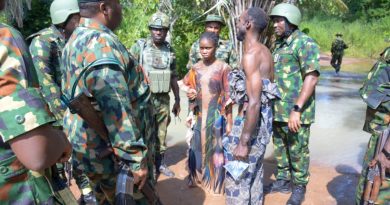
The Nigerian state has spent well over a decade chasing terrorists through forests, mountains and isolated villages. Thousands of soldiers have been deployed, billions of naira have been committed to military hardware, while countless gallant officers have paid the supreme price in the battle against Boko Haram, the Islamic State West Africa Province, ISWAP and other violent groups. Yet, amid these sacrifices, one question has remained unanswered: how do these terrorists continue to fund their operations despite sustained military offensives?
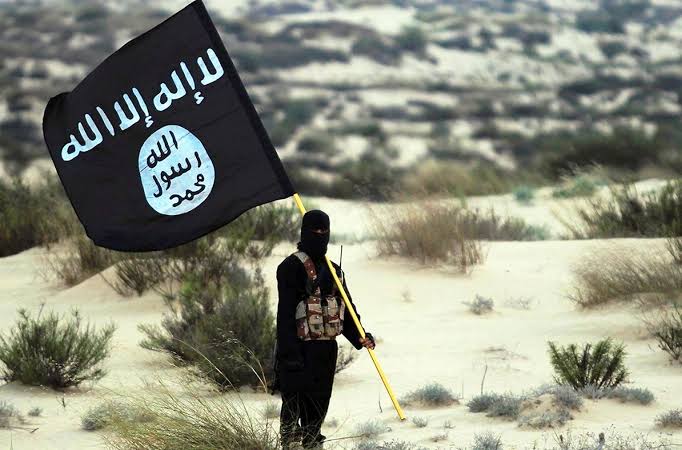
It is a question that has become increasingly difficult to ignore. Terrorism is not sustained by ideology alone. It thrives on money. Every attack carried out in Borno, Yobe, Adamawa, Kaduna, Niger or Zamfara is financed somewhere. Every rifle procured, every motorcycle purchased, every informant recruited and every explosive manufactured has a financial trail. The insurgent carrying an AK-47 in the bush is merely the visible face of a sophisticated financial network stretching from local collaborators to international facilitators.
This reality explains why the Federal Government has, over the last three years, shifted considerable attention from merely confronting terrorists on the battlefield to dismantling the financial ecosystem that keeps them alive. It is perhaps the least celebrated but arguably the most strategic aspect of Nigeria’s counter-terrorism policy.
READ ALSO: Troops Rescue 360 Captives in Mandara Mountains, Kill 76 Terrorists in North-East
The legal foundation had already been strengthened with the signing of the Terrorism (Prevention and Prohibition) Act, 2022, by former President Muhammadu Buhari. The legislation consolidated previous anti-terrorism laws, expanded the definition of terrorism financing, strengthened the powers of investigators and prosecutors, and established clearer procedures for freezing assets linked to terrorism. It also empowered the Nigeria Sanctions Committee to designate individuals and entities involved in financing terrorist activities.
President Bola Tinubu inherited this framework in May 2023 and, rather than allowing it to gather dust, has encouraged greater institutional coordination among the Office of the National Security Adviser (ONSA), the Department of State Services (DSS), the Economic and Financial Crimes Commission (EFCC), the Nigerian Financial Intelligence Unit (NFIU) and the Central Bank of Nigeria (CBN). The emphasis has become unmistakable: if terrorists cannot access money, their operational capacity will gradually diminish.
The results are becoming evident as security agencies have intensified investigations into suspicious financial transactions, illicit cash movements, informal money transfer networks and businesses suspected of serving as conduits for terrorist funds. Financial institutions have come under greater pressure to report unusual transactions, while designated non-financial institutions have equally been subjected to stricter compliance requirements. The Nigerian Financial Intelligence Unit (NFIU) has become more proactive in analysing suspicious transaction reports and sharing intelligence with both domestic and international security agencies.
One of the strongest indications that Nigeria’s campaign has acquired an international dimension came with increased cooperation between Nigeria and foreign governments on terrorism financing investigations. The arrest of separatist agitator Simon Ekpa by Finnish authorities in November 2024 over allegations connected to terrorist activities demonstrated that financial and operational support for violent groups can no longer be viewed as purely domestic matters. International law enforcement agencies are increasingly collaborating to monitor financial flows across borders.
Equally significant has been Nigeria’s determination to improve its standing under the Financial Action Task Force, the global body responsible for setting standards against money laundering and terrorist financing. Nigeria’s inclusion on the FATF grey list in 2023 served as a diplomatic embarrassment and an economic warning that weaknesses in financial regulation could undermine investor confidence. Since then, the country has implemented several reforms aimed at strengthening anti-money laundering and counter-terrorism financing mechanisms. Those efforts culminated in Nigeria’s removal from the grey list in October 2025 after the FATF acknowledged substantial progress in addressing identified deficiencies.
That achievement deserves more public attention than it has received. Countries placed on the FATF grey list often face increased scrutiny by international banks, higher compliance costs for businesses and reduced investor confidence. Exiting the list therefore represents more than a diplomatic success; it signals growing confidence in Nigeria’s capacity to detect, investigate and disrupt illicit financial flows.
Yet, despite these gains, the challenge remains enormous because terrorism financing in Nigeria has become increasingly decentralised.
Gone are the days when insurgent groups depended almost exclusively on foreign sponsors. Boko Haram and ISWAP have developed self-sustaining financial models that resemble organised criminal enterprises. They generate revenue through kidnapping for ransom, illegal taxation of farming communities, cattle rustling, extortion of traders, smuggling, illegal mining, fishery activities around the Lake Chad Basin and cross-border commercial transactions. Some communities living under insurgent control reportedly pay levies not because they support terrorism but because survival demands compliance.
This evolution has complicated the work of security agencies. Financial transactions supporting terrorism are no longer confined to formal banking channels. Cash dominates rural economies where banking infrastructure remains weak. Informal value transfer systems operate outside conventional financial regulations, while technological innovations have introduced new risks associated with digital assets and online financial platforms.
The uncomfortable truth is that terrorism survives not only because of hardened extremists but also because ordinary citizens sometimes become willing collaborators. Transport operators who knowingly move weapons, traders who supply logistics to insurgents, businessmen who facilitate illicit financial transfers and corrupt officials who compromise security operations all become silent partners in sustaining violence. Their motivations are often economic rather than ideological, yet the consequences remain equally devastating.
It is here that Nigeria’s counter-terrorism strategy must become even more courageous.
Arrests alone cannot substitute for successful prosecutions. Nigerians have witnessed numerous announcements of suspects apprehended for alleged terrorism financing, only for many cases to disappear into the slow wheels of the justice system. The deterrent value of arrest diminishes significantly when prosecution is uncertain or endlessly delayed. The judiciary must therefore recognise terrorism financing cases as matters requiring exceptional urgency.
Another area demanding greater attention is border security. Nigeria shares long and porous borders with Niger, Chad, Cameroon and Benin Republic. These frontiers have facilitated not only the movement of fighters but also the trafficking of cash, fuel, livestock, food supplies and weapons. Effective border management requires stronger intelligence sharing, modern surveillance technology and closer collaboration with neighbouring countries.
Political neutrality is equally indispensable. Counter-terror financing cannot become selective depending on the influence, ethnicity, religion or political affiliation of suspects. Once credible evidence exists, investigations should proceed without fear or favour. Nothing undermines public confidence more than the perception that powerful individuals enjoy immunity while less influential suspects face the full weight of the law.
There is also the question of financial literacy within vulnerable communities. Many Nigerians remain unaware that seemingly harmless commercial activities can inadvertently support terrorist operations. Accepting suspicious payments, facilitating anonymous cash transfers or ignoring reporting obligations may ultimately strengthen violent organisations. Public education must therefore become an integral component of national security policy.
Equally important is economic development. Terrorist organisations flourish where legitimate economic opportunities disappear. Unemployment, illiteracy, weak governance and chronic poverty create fertile recruiting grounds for extremist groups. Countering terrorism financing must therefore go beyond freezing bank accounts to expanding access to education, agriculture, infrastructure, healthcare and youth employment. A young man earning a decent livelihood is far less susceptible to recruitment by insurgent organisations promising quick financial rewards.
Perhaps the greatest lesson from Nigeria’s experience over the last three years is that modern terrorism is sustained less by ideology than by economics. Terrorists may preach religion, ethnicity or political grievances, but they cannot wage war without money. Every disrupted financial transaction, every frozen asset, every suspicious transfer intercepted and every financier successfully prosecuted weakens the operational capability of violent groups far more quietly than military offensives ever could.
The war against terrorism will not be won solely on the battlefield. It will also be won inside banks, courtrooms, intelligence centres, border posts, regulatory agencies and financial institutions. Soldiers may neutralise terrorists, but investigators who follow the money prevent the next generation of attacks.
Nigeria has made commendable progress in recognising this reality. The challenge now is consistency. Financial investigations must become more sophisticated, prosecutions more decisive, institutions more coordinated and political commitment more unwavering. Terrorism is ultimately an expensive business. The day Nigeria permanently cuts off the flow of money into the hands of violent extremists is the day the guns will begin to fall silent.