
NITDA seeks affordable internet, backs 95,000km fibre rollout
 0
 0
NITDA seeks affordable internet, backs 95,000km fibre rollout
By Alabidun Shuaib AbdulRahman
The National Information Technology Development Agency, NITDA has called for increased investment in digital infrastructure and affordable internet services to bridge Nigeria’s digital divide and expand economic opportunities for underserved communities.
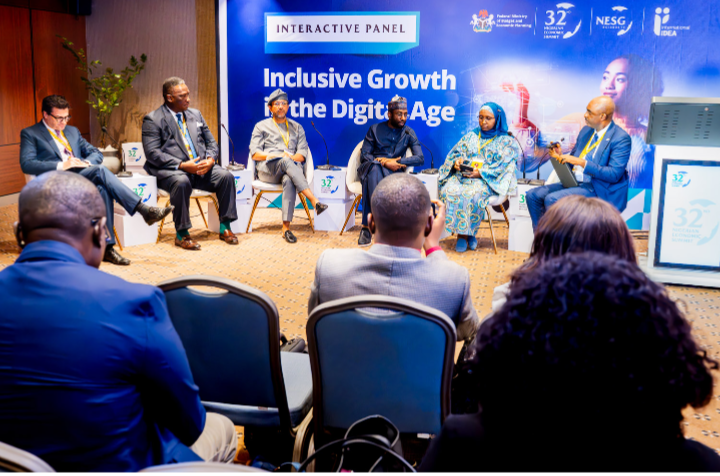
The Director-General of NITDA, Kashifu Inuwa, made the call during a session titled “Inclusive Growth in the Digital Age” at the 32nd Nigerian Economic Summit, organised by the Federal Ministry of Budget and Economic Planning.
Inuwa said affordable connectivity was essential to ensuring that Nigerians, particularly those in rural and underserved communities, could participate in the digital economy.
He noted that Africa’s telecommunications sector had demonstrated how innovation could overcome infrastructural challenges, recalling that some investors were initially reluctant to invest in the industry around 2000 because of doubts about Africans’ ability to afford mobile phones.
READ ALSO: NITDA, CBN target local data hosting, set 2027 deadline
According to him, innovative approaches to infrastructure development and service delivery helped transform telecommunications despite inadequate electricity and road networks.
He said similar approaches were needed to expand digital access, reduce connectivity costs and enable more Nigerians to benefit from technological advancement.
Inuwa warned that inadequate digital representation could also affect the inclusion of Nigerian communities, cultures, values and languages in artificial intelligence systems.
“If you are not represented, if you are not digitally visible, AI will not see you or consider you when making decisions,” he said.
The NITDA boss said the Federal Government, under President Bola Tinubu, was pursuing initiatives to expand telecommunications infrastructure and improve broadband availability across the country.
He identified the Universal Service Provision Fund project and Project BRIDGE as key interventions designed to address connectivity gaps.
According to him, the USPF initiative is intended to extend telecommunications coverage to underserved areas through the deployment of base stations, while Project BRIDGE aims to deploy approximately 95,000 kilometres of fibre-optic infrastructure nationwide.
He said the initiatives would promote open access to infrastructure, encourage private-sector investment and make broadband services more affordable.
Inuwa also called for a shift in the country’s approach to infrastructure development, arguing that roads, railways and other conventional infrastructure must be complemented by investments in digital connectivity.
“Today, we are in a digital era; therefore, we need to build digital highways for our data as well,” he said.
He added that Nigeria’s artificial intelligence ambitions would require investments in data centres, computing capacity and AI factories to enable the country to develop and deploy emerging technologies effectively.
The NITDA director-general described the relationship between connectivity, productivity and affordability as mutually reinforcing.
He explained that although telecommunications operators were concerned about consumers’ ability to pay for services, improved connectivity could increase productivity, create business opportunities and raise incomes, making digital services more affordable over time.
He urged the government and private sector to prioritise communities with limited access to telecommunications services, noting that connectivity could help individuals and businesses reach new markets and improve their livelihoods.
Beyond commercial benefits, Inuwa said digital infrastructure could improve public service delivery and reduce government operating costs by enabling citizens to access essential services online.
He explained that citizens regularly interact with government institutions for services such as birth registration, healthcare, education, employment, business development and property ownership.
According to him, a well-developed digital infrastructure would reduce the need for citizens to visit multiple government offices to obtain services, while improving convenience and administrative efficiency.
Inuwa said bridging the digital divide would require sustained investment, collaboration between government and private-sector operators, and the development of infrastructure capable of supporting Nigeria’s expanding digital economy.
He maintained that inclusive digital development was necessary to ensure that technological innovation translated into broader economic participation and national productivity.