
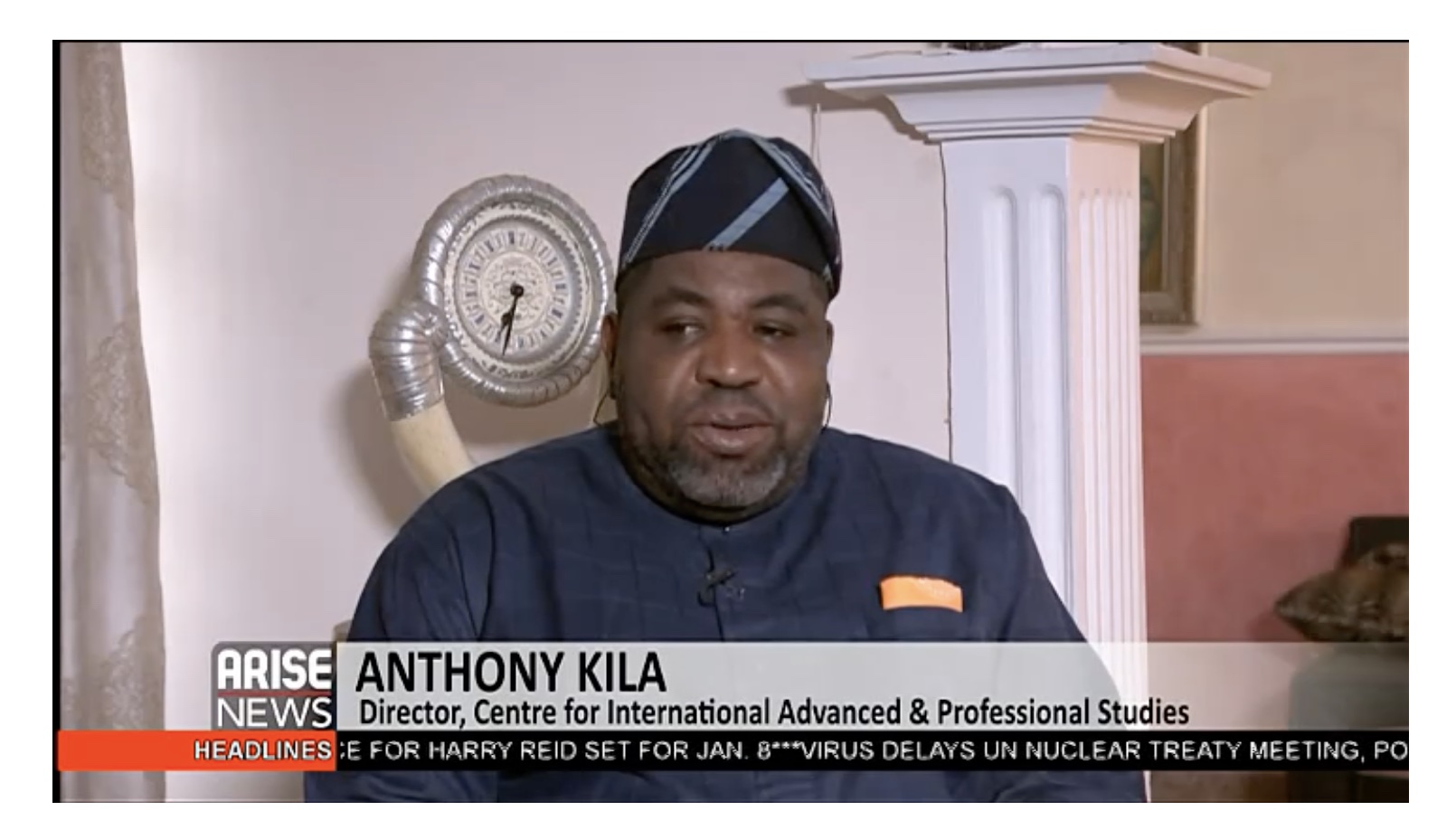
COLUMN: The Likes of Kila in Our Society, by Alabidun Shuaib AbdulRahman
 0
 0
COLUMN: The Likes of Kila in Our Society, by Alabidun Shuaib AbdulRahman
There is something particularly troubling about a person who spends years telling society what is wrong with its leaders, questioning the integrity of public institutions, demanding transparency from those in authority and insisting that accountability is the bedrock of good governance, only to find himself confronted with questions about the very integrity he expects others to uphold. Such an act goes beyond personal embarrassment; it raises fundamental questions about the credibility of public intellectuals and the moral authority upon which their influence rests. The controversy surrounding Anthony Kila, a familiar voice in Nigeria’s public discourse, presents an uncomfortable but necessary question: can those who hold others accountable escape the same scrutiny they demand of everyone else?
In a country where public trust has suffered repeated injuries from political deception, institutional failures and the abuse of public office, the distinction between what a person preaches and what he practises matters enormously. Society needs people who can interrogate power without fear, challenge dishonesty without compromise and insist that public officials answer for their actions. But what happens when one of the voices making these demands becomes the subject of serious questions about his own credentials? What becomes of the argument for accountability when the advocate must himself account for the foundation of his public identity?
The investigations published by PREMIUM TIMES on October 3 and October 10, 2026, concerning Kila’s professorial title and claimed academic qualifications, have brought these questions into sharp focus. The first report found no evidence that a recognised academic institution had awarded him the professorial rank he had publicly used for years. The subsequent investigation questioned his claimed bachelor’s, master’s, doctoral and other qualifications, reporting discrepancies between his claims and information obtained from institutions he said he attended. Even though Kila has rejected the description of him as a fake professor, he maintained that he stands by his credentials and said he was gathering his academic and professional documents. These are serious allegations, and the appropriate investigations must be allowed to establish the facts. Nevertheless, the questions raised cannot be dismissed simply because they concern a familiar media personality rather than an elected politician.
READ ALSO: TMSG hails Tinubu’s reforms as World Bank reports 93% rise in state revenues
What makes this controversy especially troubling is not merely the title at its centre but the public expectations attached to it. Kila has built a recognisable presence as a political analyst, public commentator and advocate of institutional accountability. His opinions have travelled through television studios, newspaper columns and public discussions. He has been part of the conversation through which Nigerians examine governance, leadership and the direction of their country. That influence should not be casually discounted, and neither should his intellectual contributions be retrospectively declared worthless because of the present controversy. The more important question is why a person with such visibility and the apparent ability to engage complex public issues would allow his professional identity to become entangled in claims that he must now struggle to substantiate.
There is a difference between possessing knowledge and possessing a certificate. There is also a difference between being intellectually capable and being entitled to an academic rank. A person may read widely, understand political economy, analyse public policy and contribute meaningfully to national debate without holding a doctorate or occupying a university professorship. Society has produced remarkable thinkers whose authority emerged from their work, experience and ability to explain difficult questions, not from the titles preceding their names. If Kila possesses the intellectual capacity that many of his admirers have attributed to him, why would any title beyond his demonstrable achievements be necessary to establish his worth?
In a society obsessed with titles, the temptation to embellish one’s credentials can become powerful. Professor, doctor, chief executive, consultant and international expert have become more than descriptions of professional standing. They are often treated as shortcuts to respect, invitations to television programmes, access to influential circles and opportunities to shape public decisions. The title can become more important than the substance of the person carrying it. Once society begins to reward appearances more generously than competence, those who understand the system may be tempted to manufacture the appearance rather than patiently establish the substance.
Yet the appetite for titles does not excuse the person who misrepresents his qualifications, if the allegations are established. It exposes both the individual and the society that makes such misrepresentation attractive. A genuine academic distinction is earned through recognised institutional processes, scholarship, teaching, research and assessment. It is not created by repeatedly describing oneself in a particular way, nor does public familiarity transform an unverified claim into an established fact. The title of professor carries an institutional meaning that cannot be replaced by personal conviction or public popularity.
On October 6, 2026, Michael and Cecilia Ibru University in Agbarha-Otor, Delta State, asked Kila to step aside from his responsibilities as pro-chancellor pending an investigation into questions surrounding his professorial status. The Independent Corrupt Practices and Other Related Offences Commission also constituted a team to investigate the allegations. These developments demonstrate that the controversy has moved beyond social media arguments and personal reputations to questions about institutional responsibility. A university governing council is not an ornamental gathering. It exercises authority over administration, policy, finances and other important aspects of institutional governance. Anyone occupying such a position must be able to satisfy legitimate questions about qualifications presented in support of his public standing.
The implications extend beyond Kila because if a university can place a person in a position of considerable responsibility without adequately verifying the credentials associated with his public profile, what does that say about its recruitment and governance procedures? If television stations repeatedly introduce a commentator as a professor without independently establishing the basis of that designation, what does that say about editorial diligence? And if the public accepts titles as evidence of expertise without asking who conferred them, the institution that awarded them or the work supporting them, are we not collectively encouraging the culture we later condemn?
Also, ARISE News has announced on October 13, 2026, that Kila would no longer appear on its platforms following the allegations and its unsuccessful attempt to obtain his response within the period it specified. The action might be said to be an afterthought. The platform should have diligently do background checks on him before making him the face and the voice of his flagship show. Suspending him after the the expose is reactional.
There is, however, a wider moral problem in the conduct of people who demand from others standards they appear unwilling to apply to themselves. The politician who condemns corruption but manipulates public resources, the activist who preaches transparency but conceals his own dealings, the journalist who demands truth but publishes unverified allegations, and the public intellectual who questions the credentials of others while leaving his own claims unexplained all participate in the same culture of contradiction. Their positions differ, but the underlying failure is identical. They want the moral authority of accountability without accepting its personal obligations.
Such people can become particularly influential because they understand the language of public morality. They know how to identify institutional weaknesses, explain the consequences of poor governance and present themselves as alternatives to a compromised establishment. Their arguments may even be correct. But correctness on one issue does not automatically confer integrity in every other aspect of life. A person can make an excellent argument about corruption and still face legitimate questions about personal conduct. Intellectual brilliance is not a permanent certificate of moral innocence.
This is why the Kila controversy must not be reduced to an opportunity for mockery. Nigerians should resist the temptation to turn an unfolding investigation into a spectacle of humiliation. The objective is not to destroy a man because questions have arisen about his academic standing. It is to establish the truth, protect institutions from misrepresentation and reaffirm the principle that no individual should stand above scrutiny. If the claims against him are substantiated, appropriate consequences should follow. If he produces verifiable evidence that resolves the disputed issues, that evidence should receive fair consideration. Neither public anger nor personal admiration should determine the outcome.
What Kila could have demonstrated, and can still demonstrate through a credible response, is that accountability begins with oneself. His explanation must address the specific questions raised by the investigations, including the institution said to have conferred his professorship and the academic qualifications now being questioned. General assurances about his professional standing cannot substitute for documents that independent institutions can authenticate. Equally, any institution that endorsed his credentials must explain the basis of its decision.
The irony is that Kila did not need to become a professor to contribute to Nigeria’s public conversation. He did not need an impressive collection of degrees to develop an informed opinion about governance. His ability to communicate, analyse policies and participate in public debate could have been judged on its merits. A society hungry for credible voices should be capable of accepting an intelligent commentator without insisting that he carry an academic title. By contrast, where an individual presents credentials that cannot withstand verification, the damage reaches beyond personal reputation to the credibility of legitimate scholars whose achievements were earned through recognised institutions and years of work.
The likes of Kila in our society remind us that the fight against dishonesty cannot succeed through eloquent speeches alone. It requires personal consistency, institutional discipline and the willingness to submit one’s own claims to the standards applied to everyone else. Those who demand transparency must be transparent. Those who insist on accountability must be accountable. And those who advise society on integrity must understand that their conduct is not exempt from examination simply because their arguments sound convincing.
Perhaps the most important lesson is that being real is not a weakness. A person who honestly presents his qualifications, acknowledges his limitations and allows his work to speak for him can still earn public respect. There is dignity in being knowledgeable without claiming an unearned distinction, just as there is honour in admitting an error and correcting it. The public may forgive human shortcomings more readily than deliberate attempts to mislead it, because honesty gives people something upon which trust can be rebuilt.
Nigeria does not lack people who can speak impressively about good governance. What it lacks, too often, is consistency between public declarations and private conduct. The country needs fewer performances of integrity and more demonstrable integrity itself. Until we learn to judge public figures by the relationship between their words, credentials and actions, we will continue to celebrate the language of accountability while struggling to establish its practice.
The question, therefore, is not whether Anthony Kila can still contribute to society. He can, provided his contributions are judged on their merits and the questions surrounding his credentials are addressed honestly. The question is whether he, and others who occupy similar positions of influence, understand that credibility cannot be demanded from the public while verification is treated as an inconvenience.
Alabidun is a media practitioner and can be reached via alabidungoldenson@gmail.com


