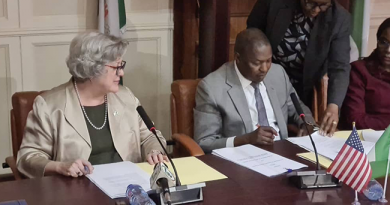

Oloriegbe urges doctors to restore ethics, public trust in healthcare
 0
0
 0
0
Oloriegbe urges doctors to restore ethics, public trust in healthcare
By Kaosara Olayemi Oladimeji
Former Chairman of the Senate Committee on Health and Chairman of the National Health Insurance Authority, NHIA, Senator Ibrahim Yahaya Oloriegbe, has urged medical practitioners to restore ethical values and public trust in Nigeria’s healthcare system.
Oloriegbe made the call on Thursday while delivering the keynote address at the 27th Annual General Meeting and Scientific Conference of the Islamic Medical Association of Nigeria at the University of Ilorin Main Auditorium.
The conference was themed, “Compassion, Competence and Conscience: Integrating Islamic Values in Modern Medical Practice.”
The former lawmaker, who has over four decades of experience in the medical profession, said the healthcare sector was suffering from what he described as a “loss of ihsān” — excellence and moral consciousness in professional practice.
He identified growing fear among patients, the migration of skilled medical personnel and situations where financial considerations override patients’ welfare as major symptoms of the problem.
READ ALSO: NITDA reforms’ll boost local software, digital sovereignty — DG
Oloriegbe also decried practices such as shouting at or humiliating patients, breaches of confidentiality, unnecessary medical procedures and diversion of medical supplies, saying they were capable of eroding public confidence in healthcare providers.
He said addressing the challenges would require both systemic reforms and personal ethical renewal among practitioners.
The former senator called for stronger professional training and improved healthcare infrastructure, equipment, medical supplies and financing, stressing that deficiencies in the system should not become excuses for abandoning professional responsibility.
“We must never allow a broken system to become the excuse that finally kills our own ihsān,” he said.
Oloriegbe urged doctors to make compassion the foundation of patient care, competence a continuous professional obligation and conscience the standard guiding their decisions, even when there was no external supervision.
He further called for greater professional solidarity through ukhuwwah, or brotherhood, urging senior practitioners to support younger colleagues and stronger institutions to assist vulnerable ones.
Drawing from the history of Islamic medicine, Oloriegbe said compassionate and ethical healthcare was deeply rooted in the Muslim intellectual tradition, citing the historic bīmāristān and the contributions of physicians such as Al-Rāzī and Ibn Sīnā.
He challenged contemporary Muslim medical practitioners to uphold the heritage by ensuring that medical ethics went beyond conference themes and professional codes to influence everyday interactions with patients.
Recalling an experience involving a poor female patient early in his career, Oloriegbe said the woman’s inability to pay initially created hesitation over her treatment but she was eventually attended to and recovered.
He said the experience demonstrated the practical meaning of compassion, competence and conscience in medical practice.
“Every code, every oath, every fine word printed on a conference banner, comes down in the end to one frightened person and one choice. Do I treat you as a trust from Allah, or as a transaction?” he asked.
Oloriegbe urged medical practitioners to regard every patient as an amānah, or trust, stressing that inability to pay should never diminish the dignity of a patient or the value attached to human life.
He charged the participants to translate the message of the conference into concrete actions, saying the true test of compassion, competence and conscience was not what was said at conferences but how the next patient was treated.
He prayed for the restoration of ihsān in Nigeria’s healthcare system and for greater blessings on IMAN and its contribution to the development of the country’s health sector.