Wike and the Abuja Master Plan
 0
 0
Wike and the Abuja Master Plan
By Alabidun Shuaib AbdulRahman
Last week, I wrote about the danger of Abuja gradually drifting towards the urban failures that have made Jakarta synonymous with flooding, poor drainage, disappearing waterways and the painful consequences of allowing development to outrun planning. The argument was not that Abuja is Jakarta. It was that cities, despite differences in geography, can repeat one another’s mistakes.
Events in Nepal this week have supplied an even more sobering reason for Abuja and Nigeria to take that warning seriously. What happened in Nepal on Wednesday, August 26, 2026, was not an ordinary rainy-season flood. A section of a glacier near Langtang Lirung in the Himalayas collapsed, sending an enormous mass of ice and rock crashing into the Lhende Khola river. The resulting torrent became a deadly mixture of water, mud, rock and debris that raced through valleys and settlements on the Nepal-China border. Reuters reported that the disaster destroyed roads, bridges, houses, power installations and the vital Gyirong border infrastructure, while hundreds were killed and nearly 1,000 people remained missing.
By Friday, August 28, the situation had become even more frightening. A lake created when debris blocked the river had begun overflowing, forcing rescue operations to be suspended because of the danger of another surge. Nepalese and Chinese authorities were already warning of further flooding.
The immediate lesson is not that Abuja has glaciers. It does not. Neither should anyone suggest that a Himalayan glacial collapse can simply be transplanted into Nigeria. The lesson is more fundamental and much closer to home: disasters become catastrophic when natural hazards meet vulnerable settlements, weak planning, inadequate infrastructure and institutions that respond after the damage instead of preparing before it.
READ ALSO: TCN declares force majeure as storm collapses three towers on Birnin Kebbi-Niamey line
Nepal has always been vulnerable to floods, landslides and other natural disasters. Its mountainous terrain makes communities particularly exposed during heavy rainfall. In September 2024, devastating rains killed at least 192 people across the country, with 56 deaths recorded in the Kathmandu Valley alone. At the time, poor urban planning and climate change are said to be the factors that worsened the flooding.
The current disaster has a different immediate trigger, but the wider warning remains the same. Scientists say climate change is increasingly destabilising high mountain environments by changing patterns of ice melt, freezing and thawing. Nepal has lost nearly one-third of its glacier ice over about three decades, according to figures cited by Reuters, while warming conditions are making compound disasters involving floods, landslides and ice or rock avalanches increasingly dangerous.
Nepal has experienced another disturbing glacial-origin flood as recently as July 2025, when the drainage of a supraglacial lake in Tibet triggered flooding along the Bhote Koshi River, killing people and destroying the Friendship Bridge between Nepal and China.
This is what climate change is doing to the meaning of disaster preparedness. The old assumption was that if you knew the rainy season, you knew roughly what to expect. That assumption is becoming increasingly unreliable. Extreme weather is becoming more complicated. Rainfall can interact with landslides. Rivers can suddenly change course. Infrastructure can become a trap. A drainage system designed for yesterday’s rainfall may be hopelessly inadequate for tomorrow’s storm.
Nigeria must understand this before another tragedy teaches us the lesson in the most expensive way possible. And Abuja, of all Nigerian cities, should understand it first. The Federal Capital was not supposed to grow like an accidental settlement. It was conceived as a planned city. The Abuja Master Plan was developed in 1979, with the Central Area plan subsequently developed in the early 1980s under Japanese architect Kenzo Tange. Its philosophy was based on organised land use, functional districts, green spaces, transportation networks and controlled development.
Its population has expanded dramatically. Its satellite towns have exploded. Its roads have stretched into areas that were once largely undeveloped. Real estate has become one of the city’s most aggressive economic activities. Natural drainage corridors have come under pressure. Green areas have been converted. Buildings have appeared in places that ought to remain open for environmental reasons. The question, therefore, is no longer whether Abuja needs its master plan reviewed. It is why the review has taken so long.
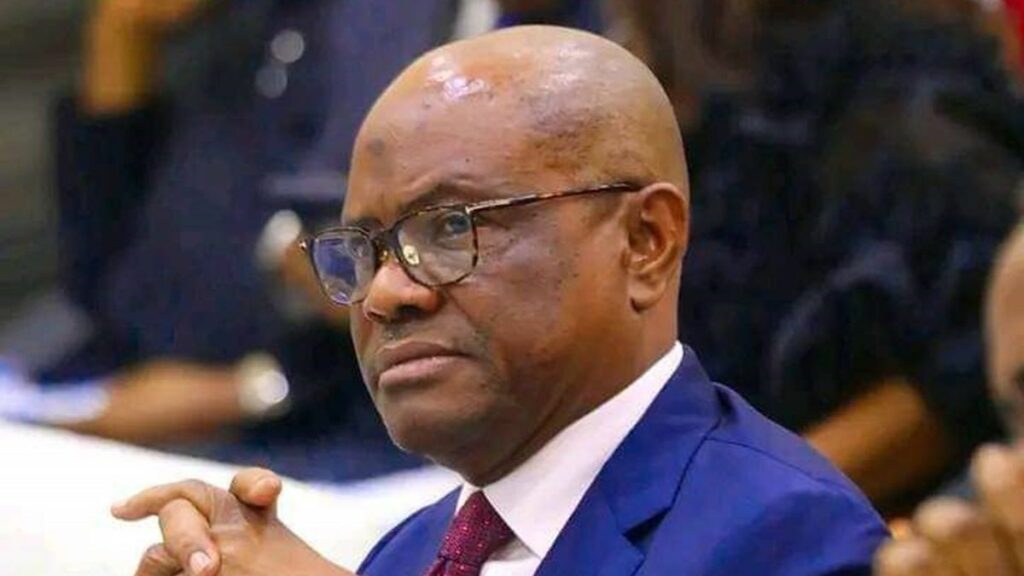
Wike has spoken about the need to review the Abuja Master Plan since 2024. In September that year, he spoke about the need to improve infrastructure, including storm-water and wastewater drainage, while discussing the review of the city’s planning framework.
Yet here we are in August 2026, and the flooding question remains sufficiently serious for stakeholders to be demanding a comprehensive review of the 1979 plan. The FCT Administration itself has now said it is reviewing the plan to reflect the current realities of the capital. That raises an uncomfortable question. If the need for an updated plan was recognised in 2024, why is Abuja still dealing with the consequences of a planning framework conceived nearly half a century ago?
This is not an argument against Wike’s achievements. Since assuming office as FCT Minister in August 2023, he has pushed roads, bridges and other infrastructure projects with an urgency that has visibly altered parts of the capital. That record should be acknowledged. But this is precisely why the argument has become more important. A road is not a city. A bridge is not a city. A beautiful interchange is not a city.
A city is a system. Water must have somewhere to go. Trees and wetlands must have somewhere to survive. Waste must have somewhere to be collected. Buildings must have somewhere they are legally permitted to stand. Roads must be designed alongside drainage. New estates must be connected to adequate infrastructure. Population growth must be anticipated rather than discovered after the fact. This is why the recent flooding in Abuja should not be reduced to the politics of demolition.
On August 18, Wike ordered the demolition of structures built on designated waterways following flooding in parts of the capital. During an inspection of flood-affected areas, the FCT Administration said it discovered a structure on a drainage area whose allocation had been revoked years earlier. That is not merely a story about one illegal structure. It is a story about the failure of a system.
If a piece of land reserved for drainage can be allocated, revoked and later occupied by a structure, then something went wrong at several points in the chain of governance. Someone approved something. Someone failed to enforce something. Someone looked away. Someone built where building was not supposed to happen. Demolition is necessary in some circumstances, but demolition after the damage has occurred is the most expensive form of planning.
That is why Wike’s administration should use the current moment to do something much bigger than clearing waterways. Abuja needs a comprehensive flood and climate resilience plan incorporated into the new master plan. Every major drainage corridor should be mapped and legally protected. Flood plains should be clearly identified. Wetlands and green areas should be treated as infrastructure, not vacant land. Development approvals should take storm-water management seriously. Satellite towns should be integrated into the same planning system rather than allowed to grow independently until their problems become Abuja’s problems.
The public should know which areas are protected waterways. Developers should know the rules before buying land. Government officials should know that approving an illegal structure will have consequences. And influential Nigerians should not be allowed to believe that their influence gives them a private exemption from public planning laws.
The recent flooding has already triggered demands from Abuja stakeholders for the desilting of drainage channels, enforcement against encroachment and a comprehensive review of the 1979 Master Plan. These demands should not be dismissed as another seasonal reaction.
The capital cannot continue to operate with a planning philosophy designed for a city that no longer exists. Wike has spent considerable political capital and public resources improving Abuja’s physical infrastructure. He should now spend the same energy modernising the rules that determine how that infrastructure interacts with the environment.
Otherwise, there is a danger that today’s roads will become tomorrow’s channels for faster-moving floodwater, and today’s new developments will become tomorrow’s flood-prone neighbourhoods. Nepal did not become vulnerable to climate-related disasters overnight.
Cities decline gradually. A wetland disappears here. A drainage channel is narrowed there. A green area is converted somewhere else. An unauthorised building is tolerated because the owner is powerful. A master plan is left unchanged for another year. A drainage project is postponed. Another road is constructed without adequate storm-water infrastructure. Then one day the rain comes. And everybody asks how it happened. Abuja still has the advantage of being able to prevent that question from becoming inevitable.
Wike has said he is reviewing the master plan. Nigerians should now demand that the review be completed, published, debated and implemented, not merely announced. The time for another committee, another promise and another inspection after another flood is gone.
The Nepal disaster is a tragedy, but it is also a warning from a distance. For Abuja, the message could not be clearer. Prepare before the water comes. Because when the flood eventually arrives, it will not ask who approved the building, who ignored the drainage, who postponed the master plan or which administration made the mistake. It will simply come. And by then, politics will be irrelevant.
Alabidun is a media practitioner and can be reached via alabidungoldenson@gmail.com