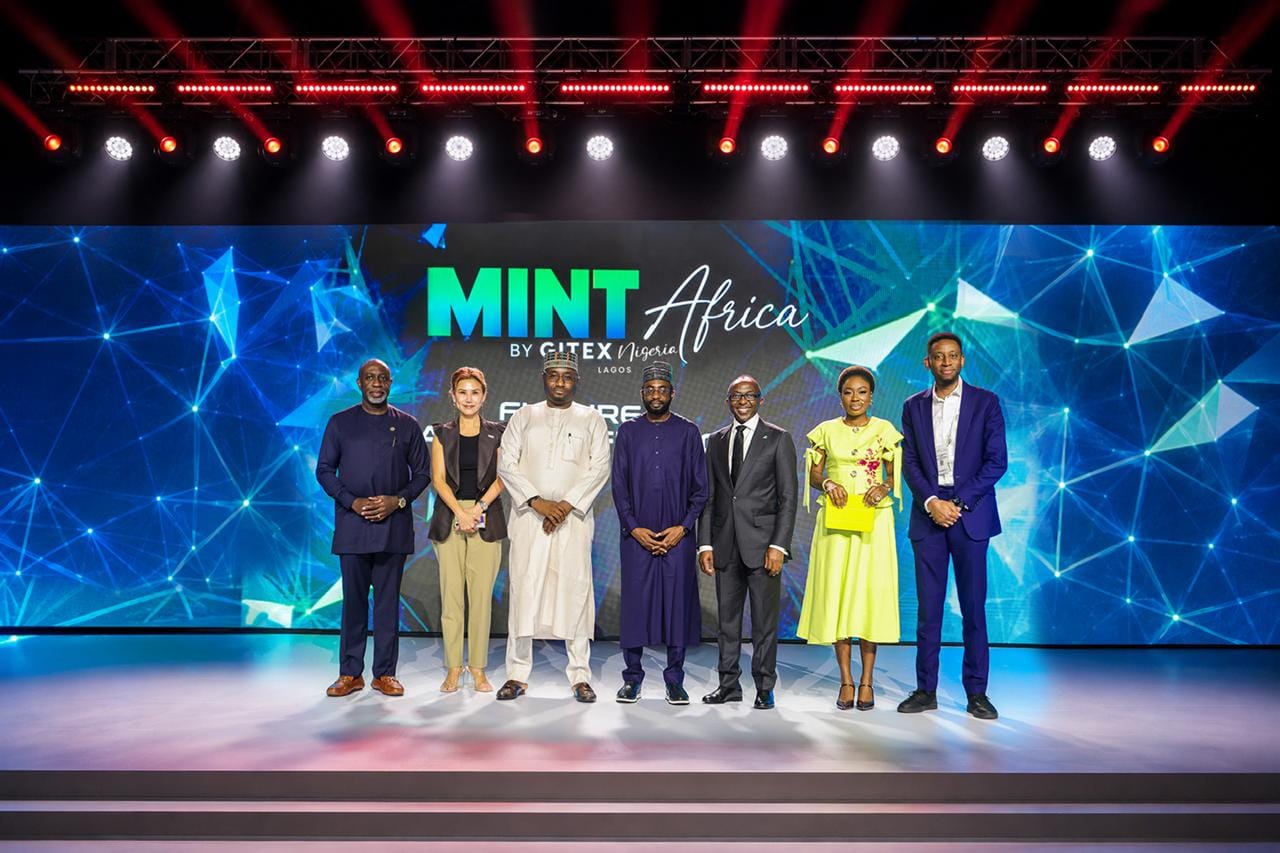
GITEX launches MINT AFRICA to drive digital finance, investment in Lagos
 0
0
 0
0
GITEX launches MINT AFRICA to drive digital finance, investment in Lagos
By Alabidun Shuaib AbdulRahman
GITEX Nigeria has announced the launch of MINT AFRICA by GITEX, a new financial technology platform designed to bring governments, regulators, investors, banks and technology companies together to accelerate the transformation of Africa’s financial economy.
The platform, which will debut in Lagos during GITEX NIGERIA Week 2027, is expected to focus on emerging technologies reshaping the financial sector, including artificial intelligence, tokenisation, stablecoins, digital assets, digital identity, cybersecurity and interoperable payment systems.
According to the organisers, the initiative comes at a time when the global financial system is undergoing significant changes, with money becoming increasingly programmable, real-world assets being tokenised and artificial intelligence beginning to transform the delivery of financial services.
They said Africa should not merely adopt the next generation of financial technology but should play a leading role in defining its development.
Lagos was selected as the host city because of its position as one of Africa’s leading financial and technology centres and Nigeria’s status as the continent’s largest fintech ecosystem.
READ ALSO: GITEX: AfCFTA, NITDA push digital sovereignty
The platform will seek to connect capital, policy, regulation, infrastructure and frontier financial technologies, while leveraging GITEX’s international network of investors, governments, technology companies and innovators.
The Lagos State Government is partnering with GITEX on the initiative.
The Deputy Governor of Lagos State, Dr Kadri Obafemi Hamzat, described the decision to host the platform in Lagos as a reflection of the city’s growing commercial and technological influence.
“When GITEX came to Nigeria, Lagos became a commercial anchor. That was not a courtesy extended to us; it was a commercial judgement. Exhibitions follow markets, and markets follow scale, capital and momentum – all of which converge here,” Hamzat said.
He added that Lagos had the potential to play a central role in shaping Africa’s digital transformation.
“Lagos is a consequential destination and what happens here helps shape Africa’s digital transformation trajectory. The next chapter of African finance will not simply arrive; it will be built here, together,” he said.
The Lagos State Commissioner for Innovation, Science and Technology, Tunbosun Alake, said the platform would seek to move financial innovation beyond discussions and towards investment and commercial partnerships.
“Africa doesn’t have a shortage of financial innovation. It has a shortage of the conversations that turn innovation into signed deals,” Alake said.
The organisers said Africa’s digital payments economy is projected to reach $1.5tn by 2030, while the African Development Bank, AfDB estimates that reforms covering capital markets, domestic resource mobilisation and public-private partnerships could unlock up to $1.43tn in financing annually.
Despite the growth of digital finance, they noted that significant gaps remain in financial inclusion.
In Nigeria, adult account ownership rose from 45.3 per cent in 2021 to 63.3 per cent in 2024, while only 9.1 per cent of adults borrowed through formal financial channels.
The Technical Adviser to the President on Economic and Financial Inclusion, Dr Nurudeen Abubakar Zauro, said deepening the financial sector would be crucial to achieving Nigeria’s ambition of becoming a $1tn economy.
“The target of achieving a US$1 trillion economy means investment, financial sector deepening, formalisation of the informal sector and enhancing economic inclusion so that the benefits can reach the last mile,” Zauro said.
He added that greater access to financing was also necessary to enable micro, small and medium enterprises to expand.
The organisers said MINT AFRICA would address areas including tokenisation and real-world assets, agentic AI and intelligent banking, stablecoins and digital currencies, next-generation payments, digital identity, cybersecurity, cross-border interoperability, regulatory innovation, capital markets and investment in Africa’s fintech sector.
The Special Adviser on Technology, Broadband and Innovation to the Lagos State Governor, Engr Ganiyu Oseni, stressed that technology-driven financial growth would require supporting infrastructure.
“Infrastructure is policy. You cannot simply regulate an economy into existence. For a digital economy, the roads are connectivity, power, identity and talent,” Oseni said.
He urged international investors to move beyond interest in Lagos and establish operational footprints in the city.
The Chief Executive Officer of the Ministry of Finance Incorporated, Dr Armstrong Ume Takang, also called for greater Nigerian participation in the emerging digital asset economy, particularly as technologies make it possible to tokenise and broaden access to investment assets.
Meanwhile, the Head of Oversight and Compliance, Virtual Assets Department, Bank of Ghana, Tahiru Al Hassan, said stronger regulatory coordination would be required across Africa as digital assets increasingly operate across national borders.
He warned that fragmented regulatory systems could hinder the development of trusted and interoperable digital financial ecosystems.
The Chief Executive Officer of GITEX, Trixie LohMirmand, said Nigeria’s fintech strength and Lagos’ growing technology ecosystem made the city an appropriate location for the new platform.
“Nigeria leads Africa’s fintech revolution. Its scale, talent and ambition make Lagos the deserving metropolis for MINT AFRICA by GITEX,” LohMirmand said.
She said the initiative would go beyond fintech to address the wider transformation of finance through artificial intelligence, tokenisation, programmable money and increasingly borderless financial markets.
“With MINT AFRICA by GITEX at GITEX NIGERIA, our ambition is to bring together the technology, regulation, infrastructure and global capital required to turn that innovation into Africa’s next financial economy,” she said.