Kaduna’s Security Question
 0
0
 0
0
Kaduna’s Security Question
By Alabidun Shuaib AbdulRahman
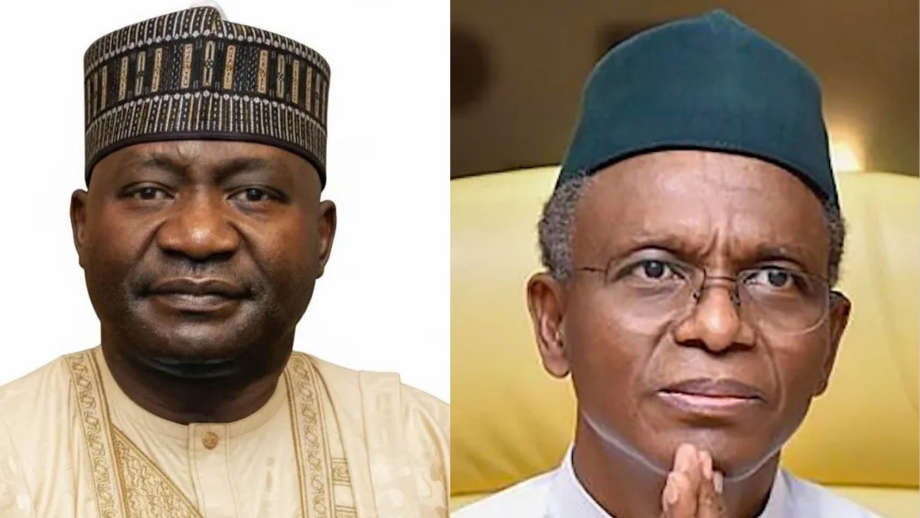
There are some arguments in Nigeria that should never be allowed to remain where they began. They start on television, move to social media, acquire partisan colours and eventually disappear beneath the next political controversy. But the recent exchange between the Minister of Defence, General Christopher Musa (rtd) and former Kaduna State Governor, Nasir El-Rufai, is too serious to be treated that way. It touches something much deeper than the political relationship between two men. It touches Kaduna. And Kaduna has a long memory.
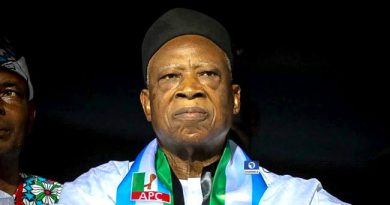
On September 3, 2026, Musa appeared on Channels Television’s Politics Today and spoke in unusually strong terms about El-Rufai’s years as governor. He accused the former governor of dividing Kaduna, creating a situation in which people from the southern part of the state could not freely live in the northern part and vice versa. More seriously, Musa said he could not be happy with somebody who had “deliberately planned” the killing of his people in Southern Kaduna. He also referred to El-Rufai’s past comments about payments made to people involved in the violence. If I must say, that is a very heavy allegation to come from a serving Minister of Defence.
El-Rufai’s family has demanded that Musa produce evidence to substantiate the allegation or retract it within seven days, while his lawyers have also demanded an apology and compensation. That response is understandable. But it should not end the conversation. In fact, it should begin a more serious one.
READ ALSO: Bida, Agaie, 14 Others Face Power Cut Over TCN Maintenance
Musa has a responsibility to explain what he meant and, more importantly, what evidence supports it. If he possesses intelligence reports, official communications, witnesses, operational records or any other material capable of establishing that a former governor deliberately planned killings, Nigerians deserve to know that such evidence exists and that it is being properly investigated. If there is no evidence, then the allegation should be withdrawn.
This is not about protecting El-Rufai. It is about protecting the credibility of public office. A Defence Minister cannot make an allegation of this magnitude and expect Nigerians to treat it as ordinary political rhetoric. The office he occupies gives his words an institutional weight that cannot simply be separated from the Nigerian security establishment. Yet, while Musa must answer for the allegation he has made, El-Rufai cannot reasonably expect his own record in Kaduna to be placed beyond examination.
When Nasir El-Rufai became governor in May 2015, he inherited a state already deeply fractured by years of ethnic, religious and communal crises. Southern Kaduna had experienced serious violence before he arrived at Government House. The historical grievances surrounding Zangon Kataf, Kaura, Kauru, Jema’a, Kajuru, Kachia and neighbouring areas were not created by his administration.
This clarification is important because political arguments often suffer from selective memory. A governor can inherit a problem without creating it. But once he governs a state for eight years, he must also accept responsibility for the decisions made under his watch and for the outcomes of those decisions. El-Rufai governed Kaduna between 2015 and 2023. During that period, the state witnessed some of its most painful episodes of communal violence and the gradual entrenchment of banditry and kidnapping.
In November 2016, violence in parts of Southern Kaduna killed dozens of people and displaced thousands. The government responded with security deployments, arrests and attempts at dialogue. The following month, El-Rufai said his administration had traced some of those involved in the violence to neighbouring countries and other parts of the Sahel. He also spoke publicly about compensation and payments intended to resolve disputes and persuade some of those involved to stop the violence.
That admission has become part of the political argument today because there is a significant difference between a government negotiating with people involved in violence, compensating victims or making payments as part of an attempt to end hostilities, and deliberately planning the killing of citizens. The first can be debated as a matter of public policy. The second is a grave allegation that requires proof.
The clarity matters because Nigeria has become dangerously comfortable with treating allegations as facts whenever they suit a political narrative. That is what Kaduna has suffered from for too long.
The violence in Kajuru in February 2019 is a good example. Scores of people were killed in attacks and reprisals involving communities in the area. The casualty figures and competing narratives differed, as they often do in communal conflicts, but the underlying reality was unmistakable: people were killed, homes were destroyed and communities were pushed deeper into fear and distrust.
Those who lived through that period do not need politicians to remind them that Kaduna was bleeding. What they need is an honest explanation of why the state has continued to experience violence despite years of government intervention. That question becomes even more important because the insecurity did not disappear with El-Rufai’s departure from office.
He left Government House on May 29, 2023. On March 7, 2024, gunmen attacked schools in Kuriga, in Chikun Local Government Area, and abducted schoolchildren and teachers. Initial reports put the number of abducted pupils at 287, although subsequent official figures placed the number at 137. The victims were eventually rescued in Zamfara State on March 24.
Kuriga was more than another kidnapping incident. It was a reminder that Kaduna’s security crisis had outlived the administration that had governed the state for eight years.
Also, in March 2024, residents of Kajuru Station in Kajuru Local Government Area reported that gunmen had abducted scores of people in yet another attack on the community. It was another illustration of the vulnerability of rural Kaduna, where communities are often separated from major security formations by difficult terrain, poor roads and vast stretches of forest.
By July 2026, the situation remained sufficiently dangerous to produce another tragedy in Kauru Local Government Area. Residents reported that at least 30 people, including eight children, were killed when attackers invaded Naridon village. Houses were burnt and the attackers reportedly escaped before security forces arrived. Thirty people. Eight of them children. That should be enough to remind everyone that the argument over El-Rufai is only one small part of a much larger problem.
The family that loses a father in Naridon does not care whether the responsibility lies with a former governor, the current governor, the Federal Government or a local security commander. The parents of the children abducted from Kuriga did not care which political party was in power. They wanted their children back. That is the human dimension that is often lost when Kaduna becomes a subject of political debate.
The danger of discussing insecurity exclusively through the language of political blame is that it creates the illusion that removing one person will solve the problem. Kaduna’s experience proves otherwise. El-Rufai left. The insecurity remained. Although it might not be like before.
Governor Uba Sani inherited it. The military continued its operations. Security agencies continued to deploy personnel. Yet communities continued to experience attacks, kidnapping and displacement. This does not absolve El-Rufai of responsibility for his own administration. It simply demonstrates that the crisis is bigger than him. The same argument applies to Uba Sani.
He cannot be blamed for creating a problem that predates him, but after more than three years in office, his administration must also be judged by whether it is succeeding in making vulnerable communities safer.
The Federal Government must face the same lense of scrutiny. General Christopher Musa (rtd) himself understands the complexity of the problem. As Chief of Defence Staff, he acknowledged the difficulties faced by security forces in dealing with kidnappers and armed groups operating from vast forests. Intelligence failures, misinformation from informants, difficult terrain and the mobility of criminal networks have repeatedly complicated military operations.
That is perhaps closer to the real Kaduna problem than the political argument currently dominating public discussion. The state does not merely have a problem of soldiers. It has a problem of intelligence. It has a problem of policing. It has a problem of criminal networks. It has a problem of porous borders and weapons trafficking. It has a problem of forests that provide concealment. It has a problem of communities that sometimes fear security agencies almost as much as they fear criminals. And it has a problem of trust.
The other problem is that Kaduna’s insecurity cannot be reduced to religion. Religion has undoubtedly shaped some of the state’s historical conflicts, and ethnic identity has often been weaponised. But the contemporary security crisis is also deeply connected to criminality, land disputes, cattle rustling, kidnapping for ransom, illegal arms flows and the economics of rural insecurity.
As expected of him, Musa should provide evidence for his allegation against El-Rufai. If the evidence exists, it should be investigated without fear or favour. If it does not, the allegation should be withdrawn. El-Rufai, on the other hand, should accept that his administration’s security policies and decisions will remain legitimate subjects of public scrutiny. The passage of time does not erase the record of a government.
Governor Uba Sani must equally accept that inheriting insecurity is not an excuse for allowing it to become permanent and the Federal Government must recognise that Kaduna is not merely another state requiring periodic military deployments. It is one of the places where Nigeria’s entire security architecture is being tested.
The country needs to understand the networks behind the violence, not merely the men carrying rifles. It needs to know who finances them, who supplies weapons, who provides information, who negotiates ransom and who benefits from communities being driven away from their farms. Until that ecosystem is dismantled, Nigeria may continue to defeat individual criminal groups without defeating the criminal economy that produces them.
Alabidun is a media practitioner and can be reached via alabidungoldenson@gmail.com